There’s a smudge on the bottom-left corner of my living room window that’s been there since approximately the Obama administration. I’ve attacked it with Windex, vinegar, newspaper (a lie, newspaper does nothing), and one memorable afternoon with a Magic Eraser and rising despair. Last Tuesday, a $215.99 robot removed it in eleven minutes while I sat on the floor eating crackers straight from the box, and I felt — what’s the word — vindicated? No. Tired and vindicated. It’s 9 p.m. as I write this, the fridge just made that noise it makes, and I’m ready to talk about the GNOVEL 8000Pa Window Cleaner Robot.
Some context first, because I have baggage here. I reviewed an earlier GNOVEL window cleaning robot a while back and came away lukewarm — decent bones, questionable follow-through. This one, model YW336-02, is the bigger, louder-claiming sibling: 8000Pa of suction, a “15-stage anti-fall system,” four cleaning modes, a 120mL water tank feeding four ultrasonic misting nozzles. The listing copy reads like it was written by someone who mainlines energy drinks. The product itself, thankfully, is calmer than its marketing.
Unboxing, or: The Smell Test
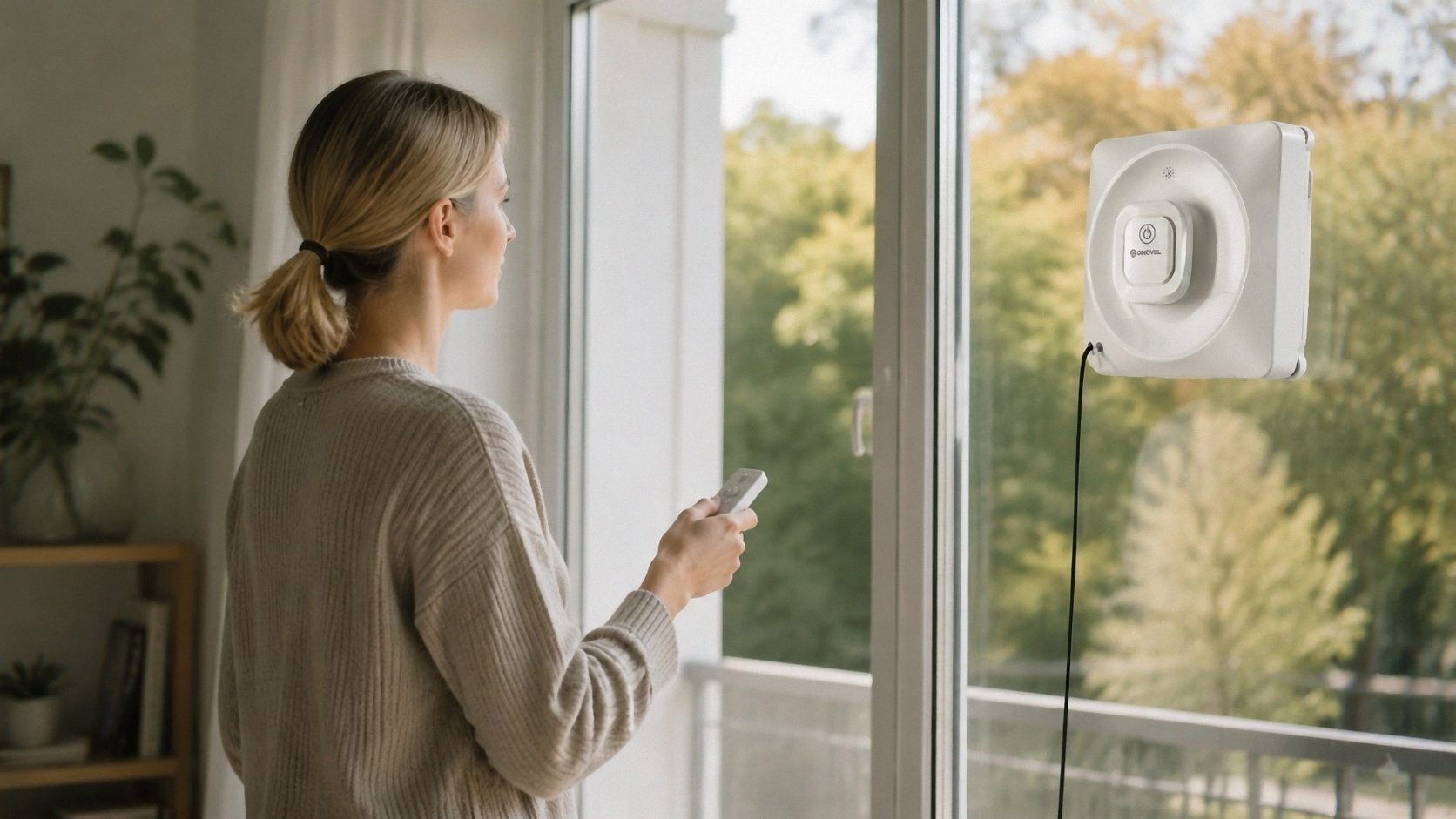
First boring physical detail, because I keep a ledger of these: the white-orange shell has a matte texture that feels like the outside of a decent insulated water bottle, and the power button depresses with a firm, slightly rubbery thunk — not a click, a thunk. The whole unit weighs less than I expected when I lifted it from the foam, and for one irrational second that made me trust it less. Light things fall better, my brain offered. My brain was wrong, but we’ll get there.
Also — and this is the kind of thing only an owner would know — the water tank cap seals with a little silicone plug that tethers to the body with a flap so thin I am certain, spiritually, that it will tear off by next spring. It hasn’t. But I look at it every refill like it’s living on borrowed time.
8000Pa: The Gym-Grunt Number, Actually Justified?
I mocked this number before I turned the thing on. 8000Pa is the suction equivalent of a guy grunting too loud at the gym — you assume it’s compensating. Then I pressed the robot to my upstairs window, the one with the slightly wavy glass I’ve learned not to trust, and it seated itself with a low, rising whine and simply did not move. I pulled at it gently. It stayed. I pulled less gently, safety rope clipped because I’m not an animal, and it stayed.
The 15-stage anti-fall system is marketing arithmetic — nobody can tell me what the fifteen stages are, and I suspect “the suction” accounts for nine of them — but the outcome is real. Over three weeks, across nine windows, two mirrors, and one regrettable experiment on the bathroom tile, it never slipped. Not once. For comparison, when I tested the [ERICAT window cleaner robot] with its modest 2800Pa, I babysat it like a toddler near stairs. The GNOVEL I left alone with a cup of coffee. That difference in blood pressure is worth actual money to me.
If you’re shopping around, this is the one I’d put my own cash on — the GNOVEL 8000Pa Window Cleaner Robot was $215.99 when I pulled the listing, down from $269.99. Full disclosure, once, right here in the middle like a person: if you grab one through the links here, I might get a small cut — costs you nothing extra and keeps the lights on.
Four Modes, Two of Which Matter
Quick Clean, Deep Clean, N-Pattern, Edge Clean. Here’s my honest field report:
Quick Clean is the one you’ll use 80% of the time. It’s a straightforward up-and-across pass, and for maintenance grime — pollen, dust, the general film of existing near a road — it’s enough. Deep Clean does a double pass with more spray, and it’s what resurrected the Obama-era smudge. N-Pattern is Deep Clean with extra steps and, near as I can tell, no extra payoff. Edge Clean is… we’ll come back to Edge Clean. Pour one out for Edge Clean.
The path planning itself is genuinely good. The listing says the narrow 1.6-by-1.6-foot body lets it slip around window locks and tight corners, and this is one of those rare claims that survived contact with my apartment. My bedroom window has a crank handle that juts out like a middle finger, and the robot navigated around it with a little hesitation shimmy — pause, reposition, continue — instead of the full existential shutdown cheaper units perform. The HOBOT S7 Pro handles obstacles a touch more gracefully, but that machine costs meaningfully more, and the gap isn’t what it used to be.
The Spray System, Where GNOVEL Quietly Wins
Four nozzles, ultrasonic atomization, 120mL tank. In plain terms: it mists a fine, even fog ahead of the pads instead of spitting droplets at the glass like some of the competition. The practical difference showed up on my big living room pane — one tank, whole window, no refill. With smaller-tank robots I’ve reviewed, a big pane means a mid-session top-up, which means you standing there holding a spray bottle feeling like the robot’s unpaid intern.
The mist is also why the middle 90% of every window comes out genuinely streak-free. Center glass? Flawless. Mirror-like. The “customers say” summary on the listing mentions someone claiming the cleanest windows in 28 years, and while I’d normally roll my eyes at that, I get it. The centers of my windows have never looked this good.
The Edge Problem, Because There Is One
Okay. Deep breath. The edges.
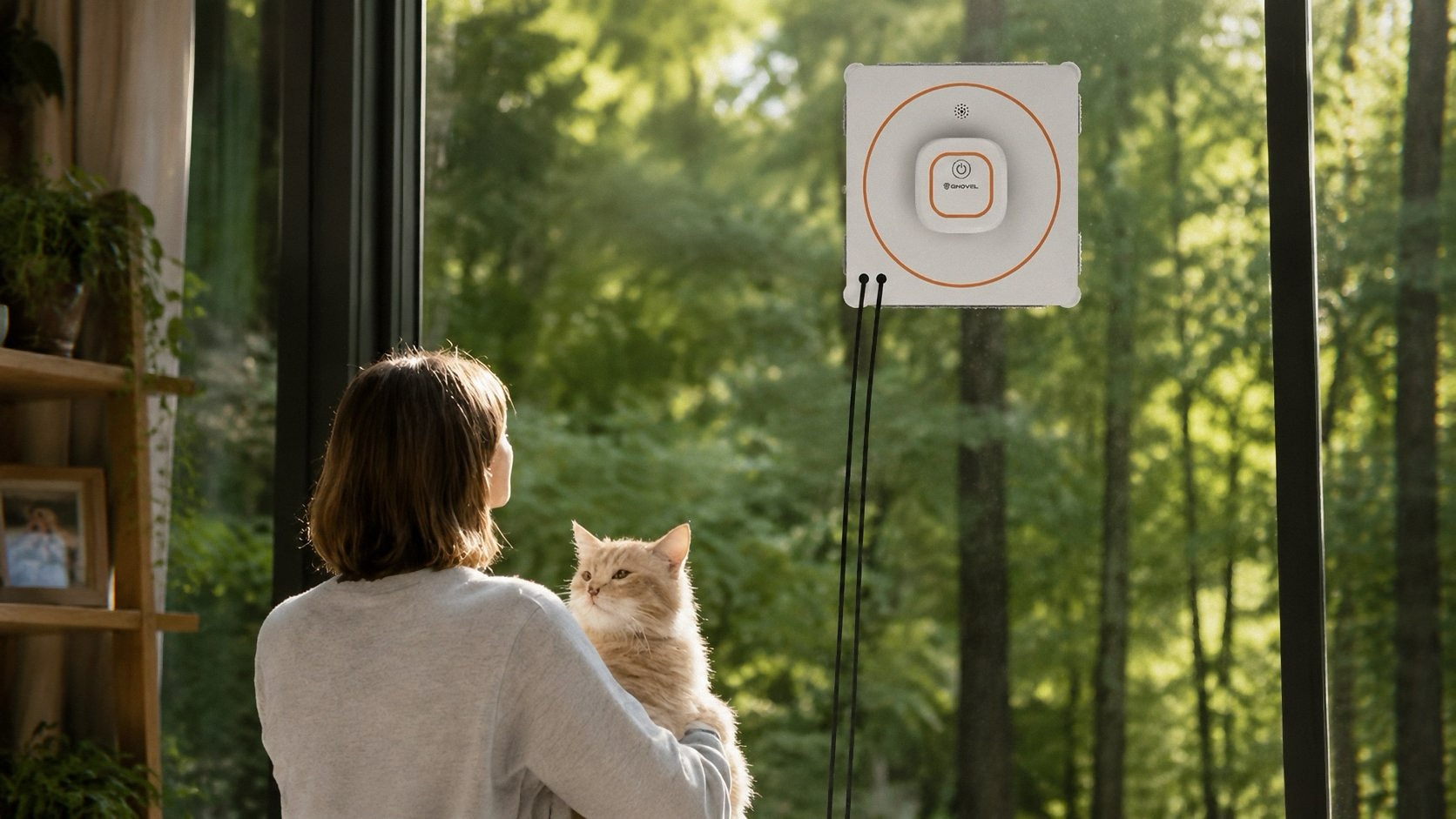
There’s a smear line — a faint, greasy-looking smudge — that this robot leaves along the outer border of the glass, maybe an inch in from the frame, most visible in angled morning light. I noticed it on window two. I tried everything: fresh pads, less solution, more solution, the Edge Clean mode specifically designed to address this exact thing. The smear persisted. And then I went and read the reviews on the listing — all 21 of them, 4.3 stars average, with a telling 13% sitting at one star — and there it was. A handyman in a high-rise condo returned his over streaks and wheel marks. Another owner cleaned twenty windows and found the same smudge line on every single one “in the right light and angle.”
So it’s not my unit. It’s the design. The pads don’t quite reach flush to the frame, and whatever the outer track wheels deposit in their final pass stays there. My workaround: a microfiber cloth and ninety seconds of hand-wiping the perimeter after each window. Ninety seconds. I timed it, because I am the kind of person who times his own resentment. It’s a small tax on an otherwise automated job, but it’s a tax, and you deserve to know about it before the box arrives.
Two more honest dings, quickly. The manual appears to cover multiple models — mine referenced battery-charging steps for a battery that, as one confused reviewer also discovered, does not exist in the way the booklet implies. And the app works, but it’s clearly a white-label situation; the pairing process asked me to stand near the robot with my phone like I was trying to introduce two shy cats. It paired on the third try. It has not forgotten the robot since, which is more than I can say for the ECOVACS Winbot Mini2’s software experience, so credit where due.
The Outside Test, Because That’s the Whole Point See Today’s Deal on Amazon
Interior windows are the tutorial level. The reason anyone buys one of these is the outside of an upstairs window — the glass you’d otherwise pay a guy $200 to reach, or reach yourself via the ladder statistics that keep ER doctors employed. So out it went, second floor, safety rope clipped to the window latch, me watching through the glass with my palms sweating like I was defusing something.
It cleaned the exterior of the bedroom window without drama. The rope never went taut. The pads handled the outside grime — the spider-web dust, the mysterious bird-related incident — with one Deep Clean pass and a follow-up Quick. There was a moment, maybe four minutes in, where a gust of wind pushed the unit visibly sideways against its suction and every alarm bell in my lizard brain rang at once. The robot adjusted its posture, resealed, and kept mowing its rows. I went and sat down after that. My heart needed a minute; the robot did not.
Living With It
Noise-wise, the listing claims “low noise,” which is a lie of modest proportions. It’s quieter than the ERICAT, roughly conversation-over-able, a steady vacuum hum rather than a shriek. I ran it during a phone call once and nobody asked what the hell that sound was. That’s my benchmark. Passed.
Maintenance is the standard window-robot liturgy, and I’ll keep it short because I’ve preached this sermon before: wash the pads after every couple of sessions, wipe the suction ring, check the rope. GNOVEL’s own product page literally shouts “Clean After EACH USE! Say Goodbye to Streak!” at you in the brand carousel, which is accidentally the most honest marketing on the entire listing. Dirty pads are the number one cause of the streak complaints in those one-star reviews — I’d bet money on it. My full routine is in how to properly maintain a window cleaning robot and extend its lifespan, and the pad-washing specifics in the ECOVACS Winbot maintenance guide apply here word for word. Skip this stuff and you will become a one-star review. It’s the circle of life.
One more owner detail before I forget: the status LED on this thing is bright enough to read by. Not “find your way to the bathroom” bright — read by. If it lives in a bedroom, store it in the closet or you’ll have a tiny orange nightlight you never asked for.
Who This Is For See Today’s Deal on Amazon
If you’ve got big panes, high windows, or a justified fear of ladders — and a tolerance for ninety seconds of edge touch-up — this is the best-value window robot I’ve tested this year. The suction is real, the spray system is better than rivals at this price, and the 4.3-star average across 21 ratings feels about right: the five-star people have normal windows and wash their pads, the one-star people met the edge smear and took it personally. Both are correct.
If you demand frame-to-frame perfection with zero hand involvement, spend up on the HOBOT or accept that window cleaning still contains a human in the loop. Me, I’ve made peace with the cloth. The robot does the part that was going to kill me; I do the part that takes ninety seconds. As business arrangements go, it’s the healthiest one in this apartment.
The crackers are gone and the fridge made the noise again. If you have textured or wavy old glass, do a return-window test on your weirdest pane first — just trust me on that one.