Disclosure: As an Amazon Associate, Window Robot Lab earns from qualifying purchases. This does not change our testing or recommendations.
A common hesitation among first-time buyers looking at an ECOVACS WINBOT W3 OMNI or W2 Pro Omni is whether a $500 to $700 gadget will actually get pulled out of the closet. Unlike a floor robot vacuum that runs every afternoon on a schedule, a window robot still requires you to carry it to the glass, press start, and move it from pane to pane.
Direct Answer: Most WINBOT owners fall into two usage patterns: every 2 to 4 weeks for homes with sunrooms, shower enclosures, large mirrors, or patio doors, or 2 to 4 times per year for full whole-house exterior glass cleaning across multi-story windows. Even at twice-a-year usage on a multi-story house, a WINBOT typically pays for itself in 2 to 3 skipped professional window-cleaning visits while delivering roughly 90% to 95% of professional squeegee clarity.
ECOVACS WINBOT W3 OMNI vs. W2 Pro Omni
If you clean large sunrooms or multi-pane glass every few weeks, the WINBOT W3 OMNI cuts hand-washing effort with its 1-minute Vortex pad-washing dock. If you clean seasonally and want a lighter, lower-cost cordless unit, the WINBOT W2 Pro Omni is the practical pick.
Real-World Usage Frequency: What Owners Actually Do
How often a WINBOT leaves the storage closet depends almost entirely on your glass layout rather than novelty. Across long-term owner reports and our own testing, households break down into three distinct schedules.
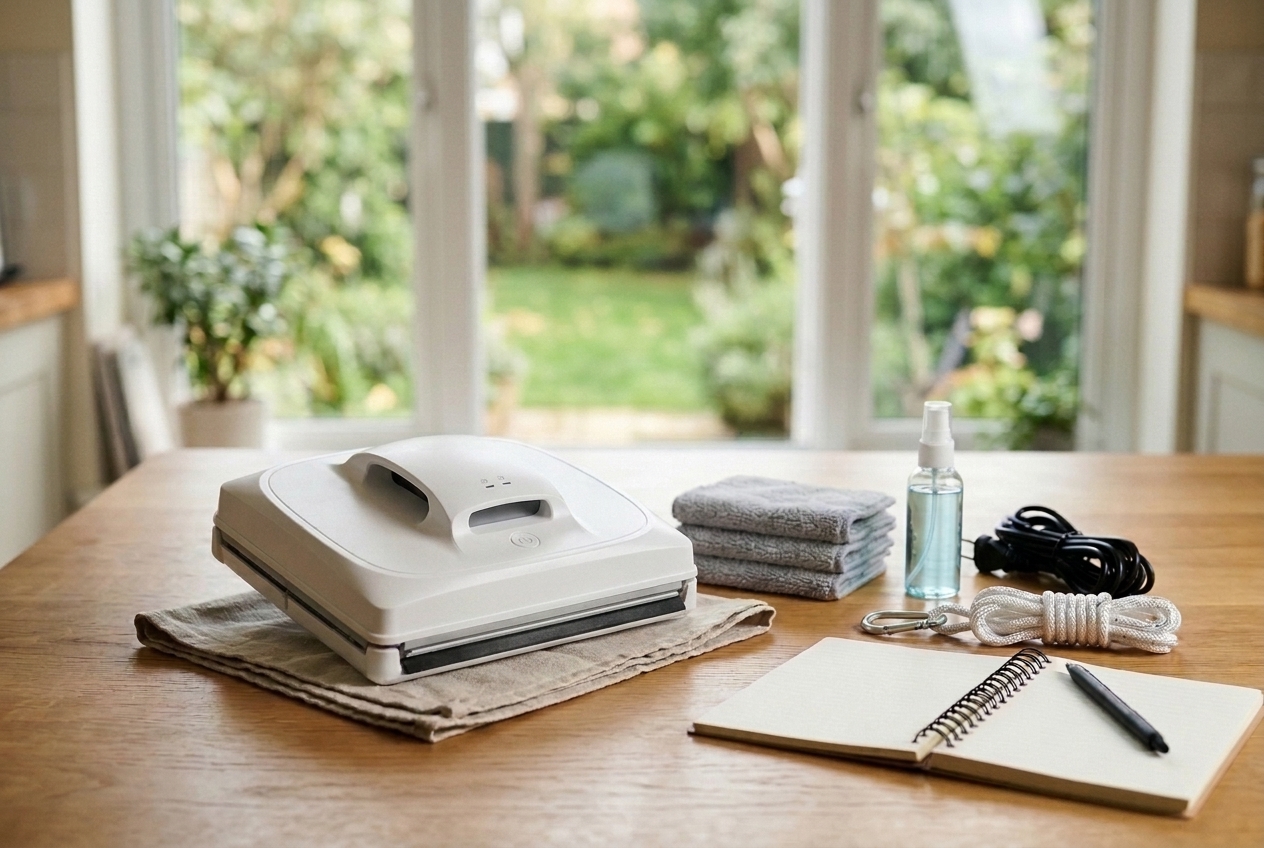
| Home & Glass Profile | Typical Usage Frequency | Time Per Large Pane | Primary Surfaces Cleaned | Payback vs. Pro Cleaners |
|---|---|---|---|---|
| Sunroom, patio sliders & frameless showers | Every 2 to 3 weeks | 5 to 8 minutes | Patio doors, shower glass, wall mirrors, sunroom panes | High convenience; replaces weekly hand wiping |
| Two- or three-story house with tall panes | 2 to 4 times per year | 8 to 10 minutes (deep exterior mode) | Exterior upper-floor glass, stairwells, vaulted panes | Pays for itself in 2 to 3 professional visits ($200 to $350 each) |
| Small apartment with a few easy-to-reach windows | Rarely (1 to 2 times per year) | 3 to 5 minutes | Standard casement windows | Low ROI; a $15 manual squeegee is usually faster |
Notice the honest pattern in the bottom row: if you only have four small ground-floor windows you can wipe in ten minutes by hand, a $699 station robot is overkill. Where owners report the highest satisfaction is on large floor-to-ceiling panels, sunrooms, upper-floor exterior windows, and walk-in glass showers, where manual cleaning means hauling out ladders or spending an entire Saturday scrubbing soap scum.
What a Real Cleaning Session Looks Like (Time and Trade-Offs)
A realistic expectation keeps buyers happy after the honeymoon week wears off. A WINBOT is not a set-and-forget appliance that crawls across walls from window to window on its own.
- 8 to 10 minutes per large exterior pane: On high-intensity mode for a full floor-to-ceiling outdoor panel, a WINBOT W3 OMNI typically takes 8 to 10 minutes. Most owners place it on the glass, walk away to answer emails or fold laundry, and come back when the chime sounds.
- Whole-house jobs take a weekend, not 20 minutes: If you have 15 to 20 huge multi-story panes, running every window inside and out usually stretches across one or two relaxed days while you do other chores around the house.
- Two honest W3 OMNI quirks to know upfront: First, the all-in-one Vortex base station is noticeably heavier to carry up stairs than a bare corded robot. Second, even though the W3 OMNI ships with two microfiber pads, the station does not let you run an automatic pad-wash cycle on one pad while the robot is out cleaning with the second pad. You still wait about 60 seconds for the pad wash between panes.
How Much Maintenance Does a WINBOT W3 Actually Require?
Maintenance is the biggest difference between older window robots and the W3 OMNI.
With a standard robot like the WINBOT W2 Pro Omni, you peel dirty microfiber pads off by hand, rinse them in the sink, or toss a stack of 6 to 8 pads into the washing machine after a session. With the WINBOT W3 OMNI, the Vortex station scrubs and wrings the pad in 60 seconds, so day-to-day upkeep comes down to four quick habits:
- Empty the dirty-water tank after each session: Do not leave murky wash water sitting in the base station for weeks, or it will develop odors.
- Refill the right liquid in each tank: Put plain water in the Vortex station tank, and either official WINBOT solution or plain distilled water in the 80ml robot spray tank. Our WINBOT W3 cleaning solution guide covers the exact two-tank rules.
- Wipe the rubber drive treads occasionally: Dust on the two rubber tracks reduces traction on damp glass. A five-second wipe with a damp cloth keeps climbs straight.
- Top off the battery before long storage: If you only use the robot twice a year, drain the water tanks dry and recharge the station battery every three months. See our ECOVACS WINBOT maintenance guide for the storage checklist.
Do You Have to Clean by Hand Afterward? (Fixing the Removal Smudge)
Most owners report that a WINBOT gets windows 90% to 95% as clean as a professional squeegee crew, which is clear enough that they do not re-wipe the glass afterward. However, there is one specific mark almost every new owner notices: a small horizontal smudge right where the robot stops and gets lifted off the glass.
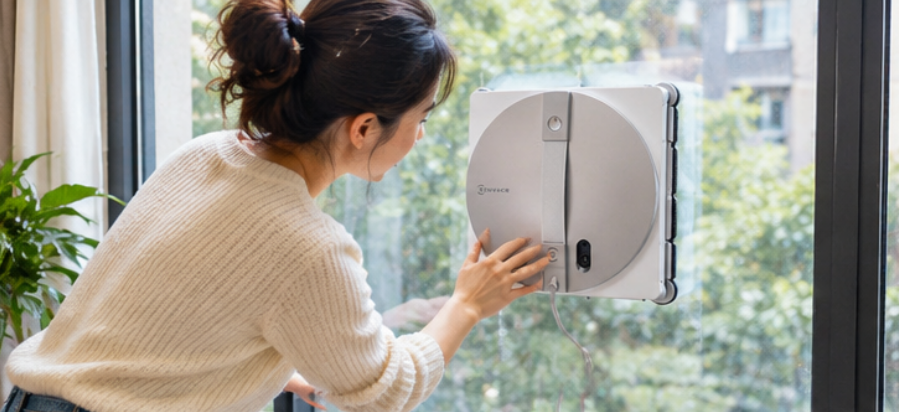
That stop mark happens because the damp microfiber pad sits stationary for a few seconds while you hold the handle and release suction. Fixing it takes three small adjustments:
- Do not oversaturate heavily soiled glass: On a filthy exterior pane, run a quick wash cycle in the Vortex dock (or swap to a fresh pad) halfway through rather than dragging muddy water across the finish line.
- Switch to distilled water for indoor mirrors and glass: Excess detergent or hard tap water leaves a visible outline at the exact spot the pad lifts away.
- Keep one dry microfiber cloth in your pocket: When you lift the robot off the glass, give that single 10 cm landing spot a two-second dry buff. That eliminates the removal smudge completely without turning the job into manual window washing.
Is a WINBOT Worth Buying? The Honest Break-Even Math
Whether a WINBOT makes financial sense comes down to what you currently pay to keep tall or large glass clean. Professional exterior window cleaning for a two- or three-story home typically runs $200 to $350 per visit in North America and Europe.
- Buy a WINBOT W3 OMNI or W2 Pro Omni if: You have large floor-to-ceiling panels, a glass sunroom, or upper-floor exterior windows you currently pay a crew to wash. Skipping just two or three visits covers the machine’s cost, and you can clean main-floor windows and shower glass far more often at near-zero marginal cost. For full pricing tiers across the lineup, check our 2026 ECOVACS WINBOT price guide.
- Skip a $699 station model if: You live in a small apartment with a handful of narrow, ground-level panes. A compact corded robot like the HOBOT-298 on Amazon or a good handheld squeegee will save you both money and closet space.
If you plan to run the robot on upper-floor exterior apartment windows, make sure to read our high-rise apartment window robot safety guide before your first run.
Frequently Asked Questions
How often should you run a WINBOT window cleaning robot?
For sunrooms, patio doors, mirrors, and glass shower enclosures, most owners run their WINBOT every 2 to 4 weeks. For exterior multi-story windows, seasonal cleaning 2 to 4 times per year is typical and enough to keep rain spots from etching into the glass.
How long does a WINBOT W3 take to clean one window?
A standard medium pane takes roughly 4 to 6 minutes on normal mode. A large floor-to-ceiling exterior window on high-intensity deep clean mode takes about 8 to 10 minutes, plus 1 minute if you run the automatic pad-wash cycle afterward.
Why does my WINBOT leave a smudge where I pull it off the glass?
When a window robot finishes and waits for pickup, the wet microfiber pad rests in one spot, leaving a faint moisture outline when you pull it away. Using clean pads, switching to distilled water on indoor glass, and giving the pickup spot a quick dry microfiber wipe removes it completely.
Does the WINBOT W3 OMNI require a lot of ongoing supplies?
No. The Vortex station washes pads with plain water, so your only recurring costs are occasional replacement microfiber pads and an optional bottle of low-foam cleaning fluid for greasy exterior windows. You can check current bundles for the ECOVACS WINBOT W3 OMNI on Amazon.