Disclosure: As an Amazon Associate, Window Robot Lab earns from qualifying purchases. This does not change our testing conclusions.
If you just unboxed an ECOVACS WINBOT W3 OMNI, you will quickly notice it has two separate water reservoirs: the small 80ml tank built into the climbing robot itself, and the larger clean-water tank inside the Vortex auto-washing station. A common question among new owners on Reddit is whether both tanks require official ECOVACS cleaning solution, or whether plain water is enough.
Direct Answer: For the 80ml robot spray tank, use either the official ECOVACS WINBOT cleaning solution or plain distilled water. For the Vortex station pad-washing tank, use plain water only. You do not need to add detergent or cleaning solution to wash the pads. Never put household glass cleaners (such as ammonia-based sprays, vinegar, or dish soap) into either tank.
ECOVACS WINBOT W3 OMNI
Includes an 80ml three-nozzle spray tank, TruEdge 1mm corner scrubbing, and a Vortex station that washes mop pads in 60 seconds using plain water.
Two Tanks, Two Different Jobs
Most of the confusion around the WINBOT W3 OMNI comes from treating the robot and its base station as if they share one plumbing loop. They do not. Each tank handles a separate part of the cleaning cycle.
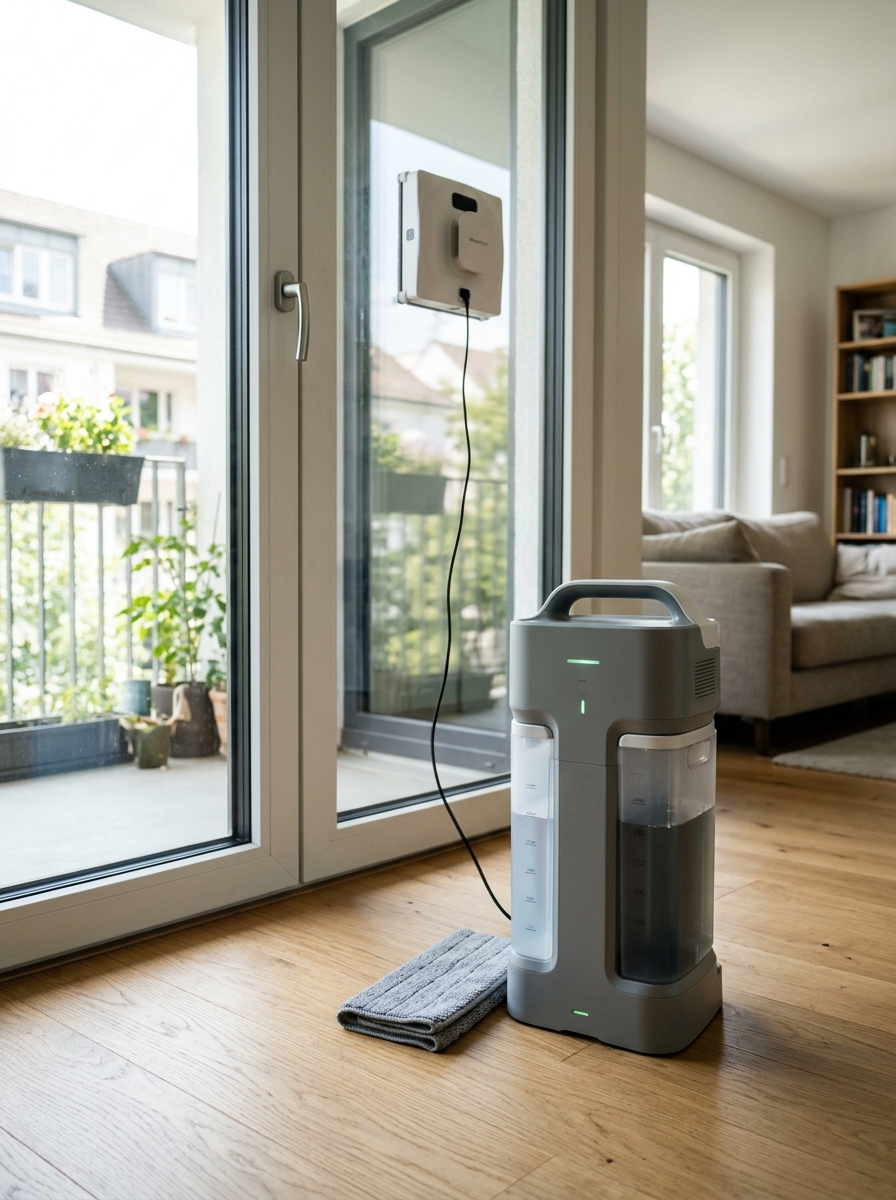
- The 80ml onboard spray tank (inside the robot): This tank feeds the three-nozzle wide-angle spray system while the robot climbs your glass. Because those nozzles have tiny orifices and sit directly above the rubber drive treads, liquid chemistry matters here.
- The Vortex clean-water tank (inside the base station): During the 1-minute pad-washing cycle, 16 high-pressure water jets blast the microfiber pad while densified bristles scrub it and four rubber strips squeegee the water out. That process relies on water pressure and friction, not soap suds.
If you add detergent to the station tank, the high-pressure jets whip it into foam. Residual soap stays trapped inside the microfiber pad, and when the robot climbs back onto dry glass, that leftover surfactant dries into hazy streaks. Plain water in the station tank rinses dirt out cleanly and leaves the pad neutral.
Cleaning Solution vs. Plain Water: Which Is Actually Better?
Even among experienced W3 owners, opinions split on whether to buy ECOVACS’ official bottle or stick strictly to plain water. Both sides have a point, depending on how dirty your glass is and how hard your local tap water is.
| Liquid Option | 80ml Robot Spray Tank | Vortex Station Tank | Streak & Residue Risk | Nozzle & Tread Safety |
|---|---|---|---|---|
| Official ECOVACS WINBOT Solution | Recommended for greasy or outdoor grime | Not needed | Low when pads are clean | Formulated to be low-foam and non-corrosive |
| Distilled or RO Water | Safe everyday default | Safe (ideal in hard-water areas) | Lowest overall streak risk | Zero mineral scale and zero buildup |
| Plain Tap Water | Acceptable only in soft-water homes | Safe for routine pad washing | Moderate if minerals are high | Hard water can scale spray nozzles over months |
| Household Glass Cleaner / Vinegar / Dish Soap | Never use | Never use | High haze and smearing | Can cause drive wheels to slip and corrode seals |
When Official Solution Makes Sense
Official ECOVACS solution contains mild, low-foaming surfactants tuned so the rubber drive tracks still grip vertical glass. It helps break down oily indoor fingerprints, kitchen film, and sticky tree pollen on exterior windows much faster than water alone. If you only run your robot every few weeks on dirty exterior panes, official solution saves you from needing a second pass.
Water Spray System vs. Pad Washing
On the 80ml robot spray tank, the three-nozzle system mists glass right ahead of the pad. On the Vortex station tank, 16 high-pressure jets rinse the pad inside the dock. Because those two systems are completely separate, putting soap in the base station only creates foam inside the pad fibers without helping the robot clean the glass any better.
Why Official Solution vs. Plain Water Is Debated
If you only run your robot every few weeks on dirty exterior panes, official solution saves you from needing a second pass. If you clean your windows frequently for light dust, plain distilled water is hard to beat. As long-term WINBOT owners frequently point out, even mild cleaning solutions can leave trace buildup in spray lines if the robot sits unused between seasons. Distilled water leaves zero mineral deposits inside the three-nozzle manifold and zero film on indoor mirrors or low-E coated glass.
For a deeper look at how the W3 OMNI’s spray system performs across different glass conditions, see our ECOVACS WINBOT W3 OMNI full review.
Why Household Cleaners (Windex, Vinegar, Dish Soap) Cause Problems
It is tempting to pour a splash of standard window spray or diluted dish soap into the 80ml tank when you run out of the starter bottle. Avoid doing that for three practical reasons:
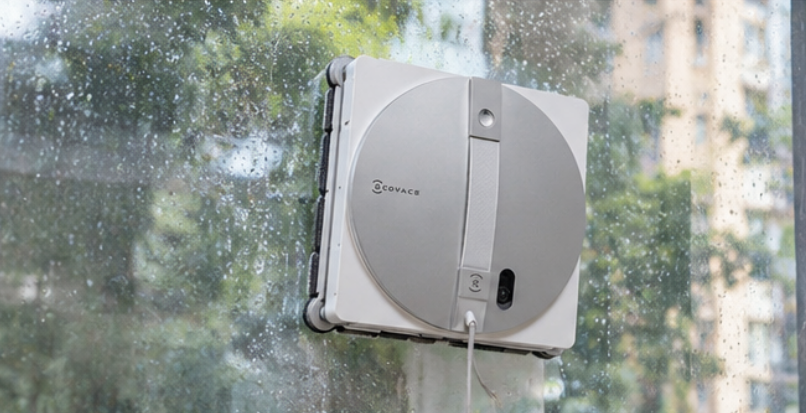
- Drive-tread slip: Standard window sprays and dish soap contain slippery surfactants and gloss agents. Because the WINBOT W3 OMNI relies on rubberized treads gripping damp glass, slippery residue makes the tracks lose traction, trigger path errors, or drift downward on large panes.
- Nozzle gunk and seal wear: Ammonia-based cleaners and acidic vinegar solutions can dry out small internal rubber gaskets and leave crystalline crust around the three spray tips after evaporation.
- Worse streaking: Because a window robot uses a thin microfiber pad rather than a disposable paper towel, excess detergent concentrates in the pad fibers and smears across the glass on the second half of the run.
Practical Routine to Keep Nozzles Clear and Glass Streak-Free
Following a simple two-tank routine avoids almost every streaking and nozzle-clog complaint:
- Fill the station tank with plain water: Tap water works fine for washing pads in most homes; use distilled water if your area leaves heavy white limescale in kettles.
- Choose distilled water or official solution for the 80ml tank: Use official WINBOT solution for heavy exterior grime, or plain distilled water for routine indoor glass.
- Never skip the dry-wipe / clean-pad rule: On heavily soiled outdoor windows, run one initial pass or rinse the pad mid-session in the Vortex dock so you are not dragging mud across the glass.
- Flush before long storage: If you are putting the robot away for winter or several months, empty the 80ml tank, refill it with distilled water, and run a brief spray cycle before draining it dry. Our ECOVACS WINBOT maintenance guide walks through the full storage checklist.
If you are still comparing ECOVACS models before buying, you can also check our side-by-side breakdown of the WINBOT W3 OMNI vs. WINBOT W2 Pro Omni or our WINBOT W2 Pro Omni long-term review to see how ongoing pad and solution costs compare.
Frequently Asked Questions
Do I need to put cleaning solution in the WINBOT W3 OMNI station tank?
No. The Vortex station tank is designed for plain water. Its 16 high-pressure jet nozzles, scrubbing bristles, and rubber squeegee strips clean the mop pad mechanically in 60 seconds without detergent.
Can I use plain water instead of ECOVACS solution in the robot itself?
Yes. Plain distilled water is safe for the 80ml onboard spray tank and eliminates any risk of soap residue or nozzle buildup. Avoid hard tap water inside the robot’s spray tank if your local water leaves mineral scale.
Why is my WINBOT W3 leaving streaks even with the right solution?
Most streaking comes from a saturated or dirty wiping pad rather than the liquid itself. Empty and rinse the station’s dirty water tank, run a fresh Vortex pad-wash cycle, or swap to a clean microfiber pad before starting the next window.
Is the WINBOT W3 OMNI worth upgrading to for the auto-wash station alone?
If you have many floor-to-ceiling or exterior windows, the automatic 1-minute pad wash removes the most tedious chore of owning a window robot. You can check current pricing and bundle availability for the ECOVACS WINBOT W3 OMNI on Amazon, or compare it against the ECOVACS WINBOT W2 Pro Omni on Amazon if you do not need automatic pad washing.