Disclosure: As an Amazon Associate, Window Robot Lab earns from qualifying purchases. This does not affect our testing standards.
Anyone living above the fifth floor has the same hesitation before putting a window cleaning robot on the outside of a pane: what happens if the power cuts out or the suction seal breaks over a sidewalk twenty stories below? On Reddit apartment and smart-home forums, high-rise drop anxiety is the single most common reason buyers put off ordering a robot cleaner.
Direct Answer: Yes, modern window cleaning robots are safe for high-rise apartments when three redundant protection layers are used together: continuous vacuum adhesion (3,800 Pa to 8,000 Pa with automatic air-pressure compensation), an internal UPS backup battery that holds the robot on the glass for 20 to 30 minutes during a power cut, and a physical fall-arrest tether anchored indoors. A robot can only fall to the street if both its vacuum seal and its indoor physical anchor fail at the same time, which is almost always caused by skipping the indoor safety tether.
Safest Window Robots for Upper-Floor Apartments
ECOVACS WINBOT W3 OMNI and WINBOT W2 Pro Omni replace loose carabiner ropes with a weighted portable indoor station, an 800 N floor suction pod, and an automatic cable arrest lock.
How a Window Robot Actually Stays on Vertical Glass
A window cleaning robot does not use sticky suction cups that slowly peel loose over time. Instead, a high-speed brushless impeller pulls air out from beneath the cleaning pad, creating a negative-pressure vacuum chamber between the robot’s chassis and the glass.
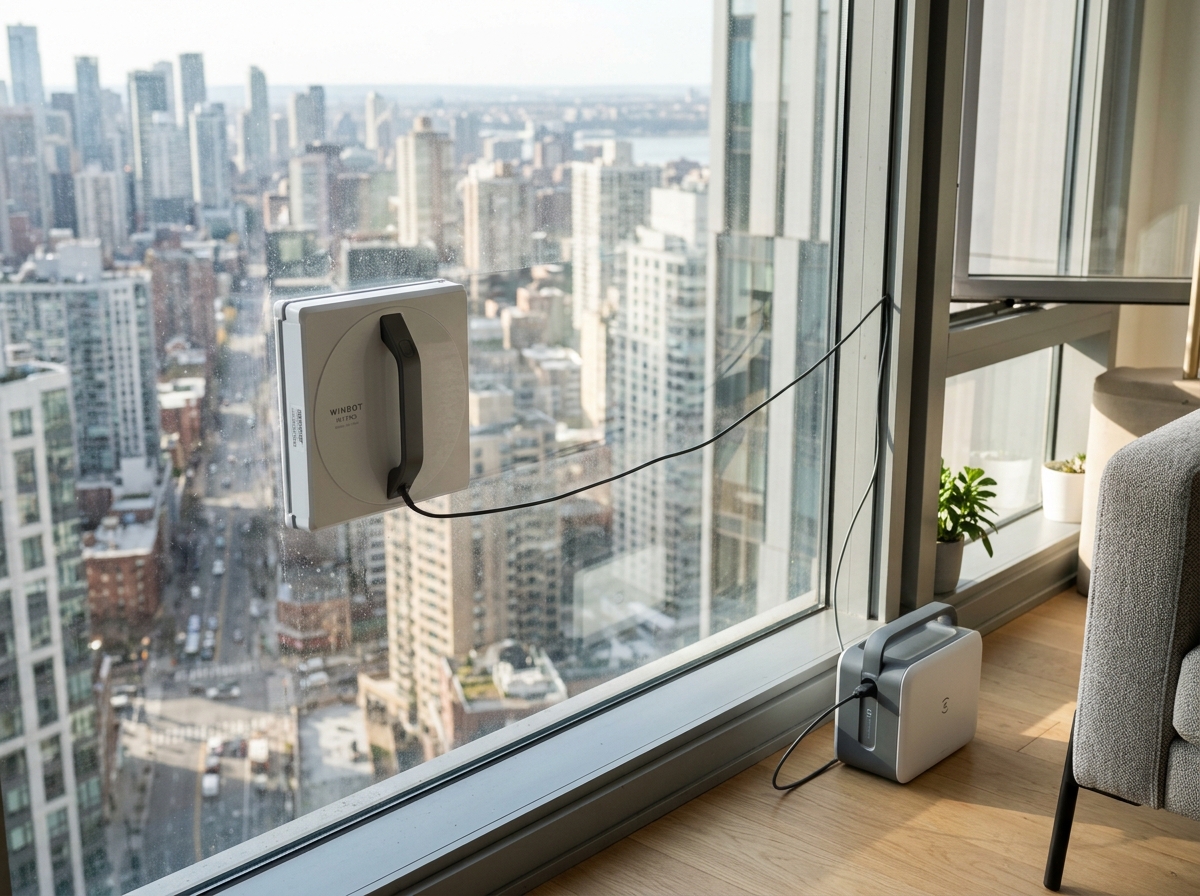
On upper floors, safety depends on three independent layers backing each other up:
- Layer 1: Active Suction and Pressure Compensation. Current flagship units generate between 4,800 Pa and 8,000 Pa of downward vacuum force. If the pad crosses a window seal, bird droppings, or a frosted decal and loses partial vacuum, internal barometric sensors detect the pressure drop in milliseconds and boost fan speed or reverse the drive tracks away from the leak.
- Layer 2: Built-In UPS Backup Battery. Even wall-plugged window robots contain a small internal lithium battery (typically 650 mAh) dedicated solely to emergency suction. If a circuit breaker trips or someone accidentally unplugs the wall cord, the robot stops driving, stays clamped to the glass for 20 to 30 minutes, and sounds a continuous audible alarm so you can pull it back inside.
- Layer 3: Physical Fall-Arrest Anchor. Every reputable robot includes either a braided safety rope with a metal carabiner (rated for 150 kg to 230 kgf of tensile load) or a composite tether locked into an indoor base station. Even if the motor were completely destroyed mid-run, the physical line catches the unit within a meter of the window sill.
High-Rise Safety Architecture Compared Across Leading Models
Not every safety setup is equally convenient in a high-rise apartment. Traditional corded robots require you to find a heavy indoor anchor point near every window, while station-based robots carry their own counterweight and floor suction lock from room to room.
| Safety Feature | ECOVACS WINBOT W3 OMNI | ECOVACS WINBOT W2 Pro Omni | HOBOT S7 Pro | HOBOT-298 |
|---|---|---|---|---|
| Primary Suction Power | 8,000 Pa | 5,500 Pa | 4,800 Pa | High-volume centrifugal pump |
| Edge & Air-Leak Sensors | Optocoupler + auto air-pressure compensation | Optocoupler + auto air-pressure compensation | Patented ELB air-leakage bumpers | Laser edge sensors |
| Power-Outage Protection | 110-min station battery + 30-min onboard UPS | 110-min station battery + 30-min onboard UPS | 20-min onboard UPS battery | 20-min onboard UPS battery |
| Physical Fall-Arrest System | Portable station with 800 N floor suction pod + auto cable lock | Portable station with 800 N floor suction pod + auto cable lock | 4.5 m braided safety rope (230 kgf rating) + carabiner | 4.5 m safety rope (150 kgf rating) + carabiner |
| Total Safety Layers | 12-level hardware and software protection | 12-level hardware and software protection | Multi-sensor UPS + rope protection | UPS + laser + rope protection |
For a broader look at how tether length and wind affect tall apartment windows, see our tested guide to the best robot window cleaners for high-rise buildings and large windows.
Why Portable Station Models Are Safer for High-Rise Apartments
In a real apartment, the hardest part of high-rise safety is rarely the robot’s suction motor. It is finding a solid indoor object near the window to tie the safety rope around. Modern apartments often have drywall surrounds, lightweight roller blinds, and no radiators near the glass.
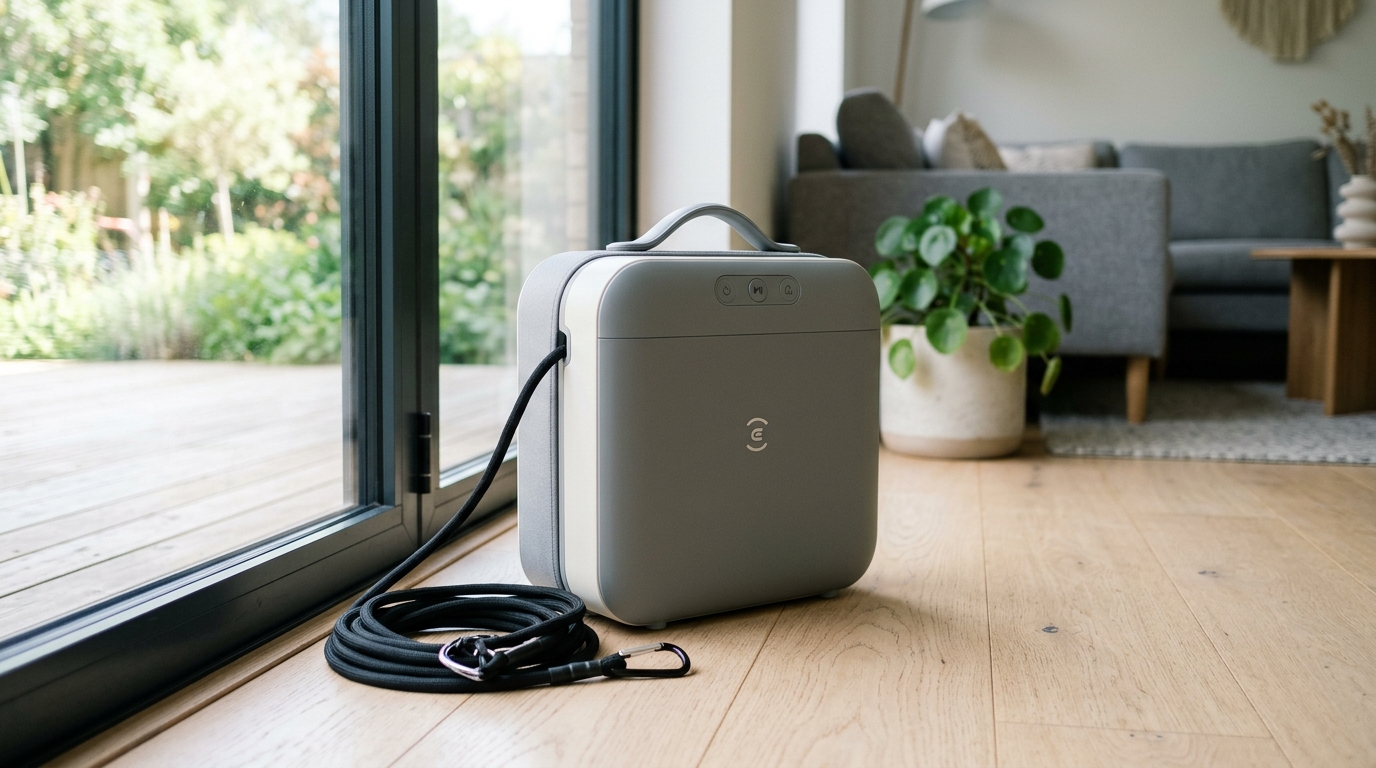
Station-equipped models like the ECOVACS WINBOT W3 OMNI and the ECOVACS WINBOT W2 Pro Omni solve this problem mechanically:
- Suction-locked floor anchor: The base station sits on your indoor tile or hardwood floor and locks itself down using an 800 N bottom suction pod.
- Automatic drop arrest: Power and safety cable run through a single 5.5-meter composite cord rated for over 100 kg of tensile force. If the cord is ever jerked outward by a falling robot, the station’s internal reel locks immediately, stopping the drop before the robot can swing into the glass panes on the floor below.
- Secondary carabiner loop: For extreme high-rise peace of mind, the station itself also includes an auxiliary strap and carabiner so you can clip the dock to a table leg or balcony railing indoors.
The Four Mistakes That Actually Cause High-Rise Drops
When a window cleaning robot detaches from an upper-floor window, user reports almost always trace the incident back to one of four preventable setup errors:
- Running the robot out of the box before the UPS battery is charged: A new robot or one that has sat in a closet for six months may have a depleted internal backup battery. Most models refuse to start until the UPS cell reaches a safe charge, but you should always charge the unit fully before putting it on an exterior high-rise pane.
- Tying the safety carabiner to a weak or movable object: Never clip a safety rope to a curtain rod, a lightweight dining chair, or a window handle that turns downward to unlatch. Use a fixed balcony rail post, a heavy sofa frame, or a suction-anchored Omni station.
- Using household soap or ammonia sprays in the water tank: Standard window sprays and dish soap leave a slick surfactant film on wet glass that causes the rubber drive treads to hydroplane and slip. Stick to plain distilled water or low-foam manufacturer fluid, as detailed in our WINBOT W3 cleaning solution guide.
- Deploying on damaged seals or freezing glass: Never place a vacuum robot over cracked glass, loose rubber window gaskets, or exterior panes below 0 degrees Celsius. Sub-freezing temperatures stiffen the rubber drive tracks and freeze spray mist on contact, breaking the vacuum seal.
If your apartment has unframed glass balcony railings without metal borders, you also need sensors that detect the edge before the tracks roll over it. See our lab test of the best window robots for frameless glass for models that pass drop-edge testing.
Five-Step Safety Checklist Before Cleaning Exterior Apartment Glass
Before setting a robot onto the outside of a high-floor window, run through this 60-second pre-check:
- Confirm full UPS battery status: Wait until the indicator light on the robot (or portable station) shows a solid full charge so the 20-to-30-minute emergency hold battery is ready.
- Anchor the tether indoors first: Lock the Omni station onto a smooth indoor floor or clip the safety carabiner to a heavy, immovable indoor fixture before opening the window.
- Shorten excess slack: Leave only enough cable length for the robot to reach the far top corner of the pane. If the robot ever slips, less slack means a shorter drop distance and less pendulum swing against the glass.
- Wipe the rubber drive treads: Run a damp cloth over the robot’s two rubber drive tracks to remove dry dust before placing it on the window.
- Wait for the vacuum seal tone: Hold the robot against the glass for three to five seconds after pressing start, and only let go once the suction motor reaches full speed and the status light confirms a locked seal.
Frequently Asked Questions
Will a window cleaning robot fall if the power goes out mid-cycle?
No. Quality window cleaning robots switch instantaneously to an internal UPS lithium backup battery when wall power or station power stops. The robot stays suctioned to the glass for 20 to 30 minutes while sounding an audible alarm so you can retrieve it.
Can high-altitude wind blow a window robot off an apartment window?
Normal crosswinds on upper floors will not pull an 8,000 Pa or 5,500 Pa robot off flat glass, though strong gusts can blow fine ultrasonic mist away from the pad. Avoid running any exterior window robot during storm warnings or high-wind advisories, and choose multi-nozzle pressure sprayers like the ECOVACS WINBOT W3 OMNI on Amazon or the ECOVACS WINBOT W2 Pro Omni on Amazon for breezy balconies.
What happens if the robot hits a bird dropping or window sticker and loses suction?
If a physical bump breaks the vacuum seal completely and the pressure-compensation fan cannot recover grip, the robot will slide off the glass and be caught by its indoor safety tether or portable station cable. That is why the physical indoor anchor is mandatory on every exterior run.
Which budget window robot is safe for apartment renters?
If you have indoor wall outlets next to your windows and want a lower-cost corded unit with a proven 20-minute UPS battery and 150 kgf safety tether, check the HOBOT-298 Window Cleaning Robot on Amazon.