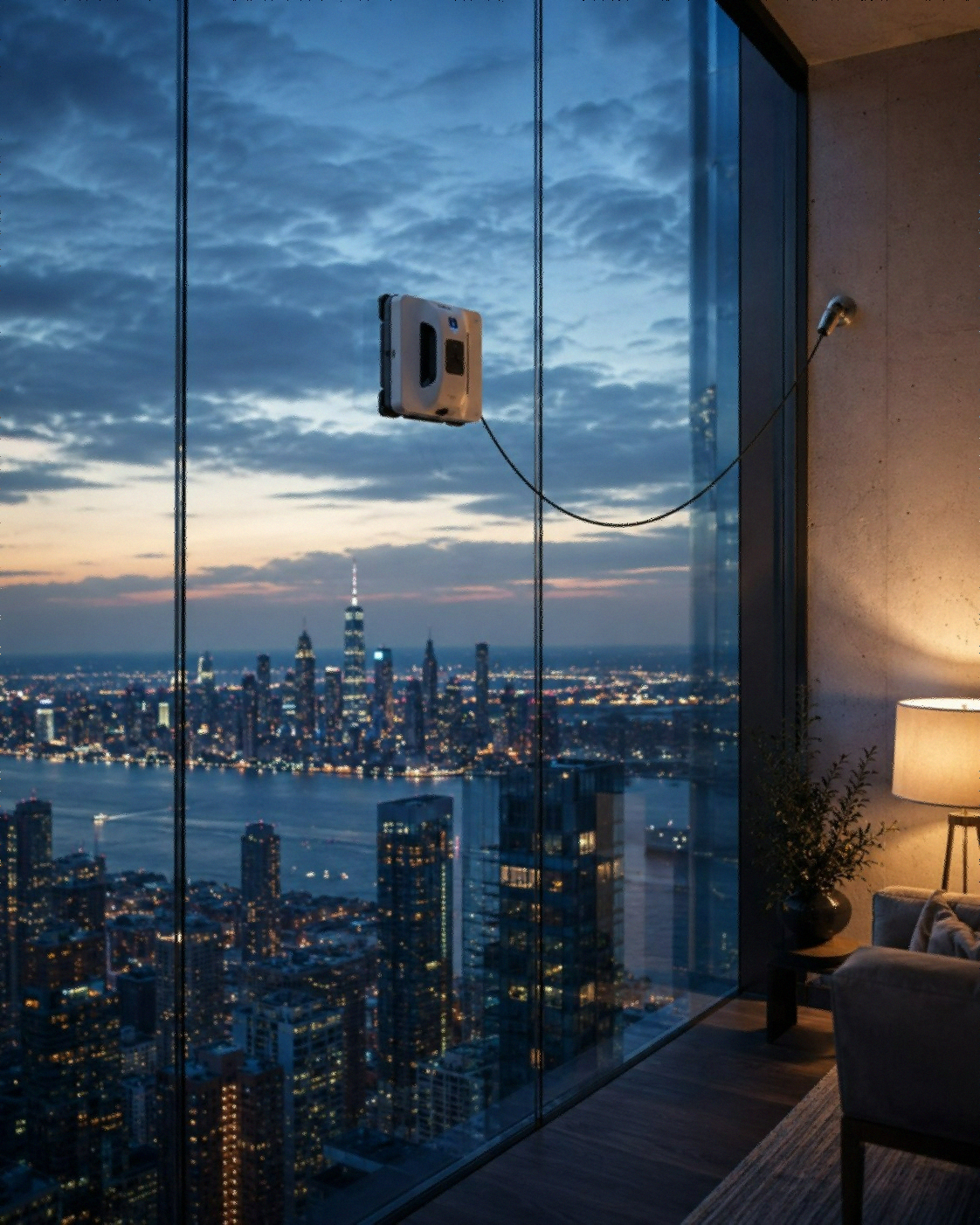
With the continuous advancement of economic development and building technology, residential and commercial buildings are reaching ever higher floors. Modern high-rises widely adopt new glass materials as wall panels to maximise natural lighting. Even ordinary apartment buildings now come standard with large balconies and floor-to-ceiling windows. But this trend brings a new problem: the ever‑growing glass surface area and increasing building heights make window cleaning increasingly difficult. Traditional manual cleaning can no longer keep up with the pace of modern architecture. Fortunately, technological innovation has given rise to the window‑cleaning robot.
First, because glass areas are larger than ever, the surface that requires regular cleaning has expanded significantly. Manual cleaning not only consumes a huge amount of our time but also suffers from very low efficiency. Second, window cleaning ranks among the more dangerous household chores, especially for families living on upper floors – exterior windows become virtually a no‑go zone for DIY cleaning. Many homeowners turn to professional cleaning services, but a full‑home clean can easily cost several hundred dollars. When it comes to exterior windows, the high‑altitude work pushes the price even higher. Faced with these costs, many families are forced to reduce the frequency of window cleaning, resigning themselves to living with cloudy, dirty glass.
In fact, technology has already provided a far better solution: the window‑cleaning robot. These devices have gained popularity in recent years, eliminating the need for physical labour while offering superior efficiency and safety. Several companies have entered this space. [Ecovacs Robotics], a leading Chinese home service robot brand, launched the industry’s first window‑cleaning robot back in 2011. Here we take a closer look at its newest model, the [Ecovacs WINBOT 880], to understand what makes these robots so appealing.
How Window‑Cleaning Robots Work
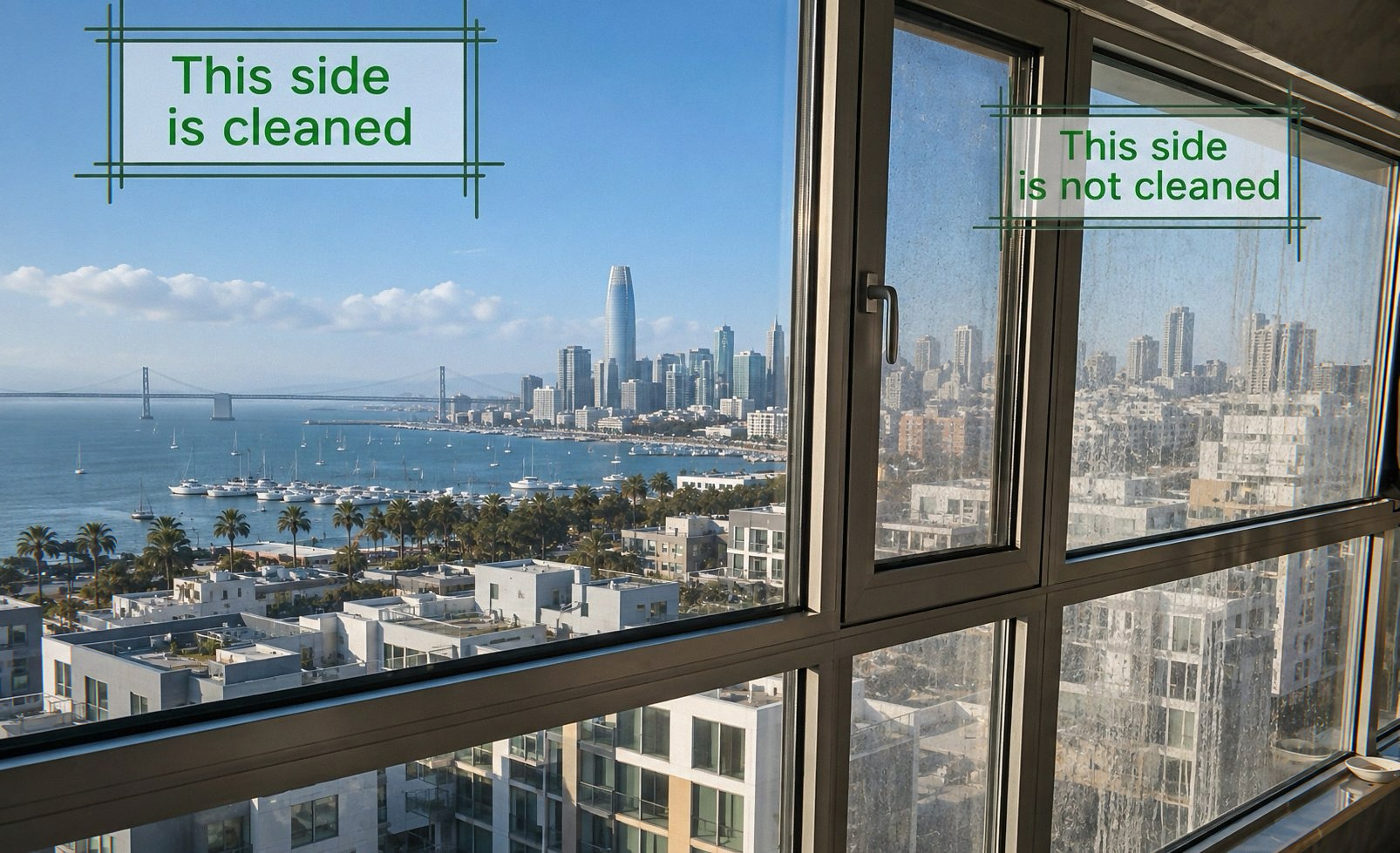
A window‑cleaning robot is exactly what its name suggests: a specialised device for cleaning glass surfaces. Its basic principle uses a built‑in fan to create suction that adheres the robot to the glass, while the surrounding microfibre pads scrub the surface. What qualifies it as a “robot” is its built‑in intelligence. The WINBOT 880, for instance, features a navigation system that autonomously plans cleaning routes, ensuring every corner is thoroughly wiped. Beyond that, it offers several key advantages:
1) Simple Operation and High Automated Efficiency
Most window‑cleaning robots are extremely easy to operate. The WINBOT 880 has just one main button – press it to start, hear the fan whir, place it against the glass, and it automatically suctions on and begins cleaning. Even seniors or children can use it with ease. The WINBOT 880 employs a four‑step cleaning pattern: wipe – scrape – scrape – wipe, which effectively cleans four times as thoroughly as a single manual pass – delivering better results in less time.
2) Multiple Safety Protections
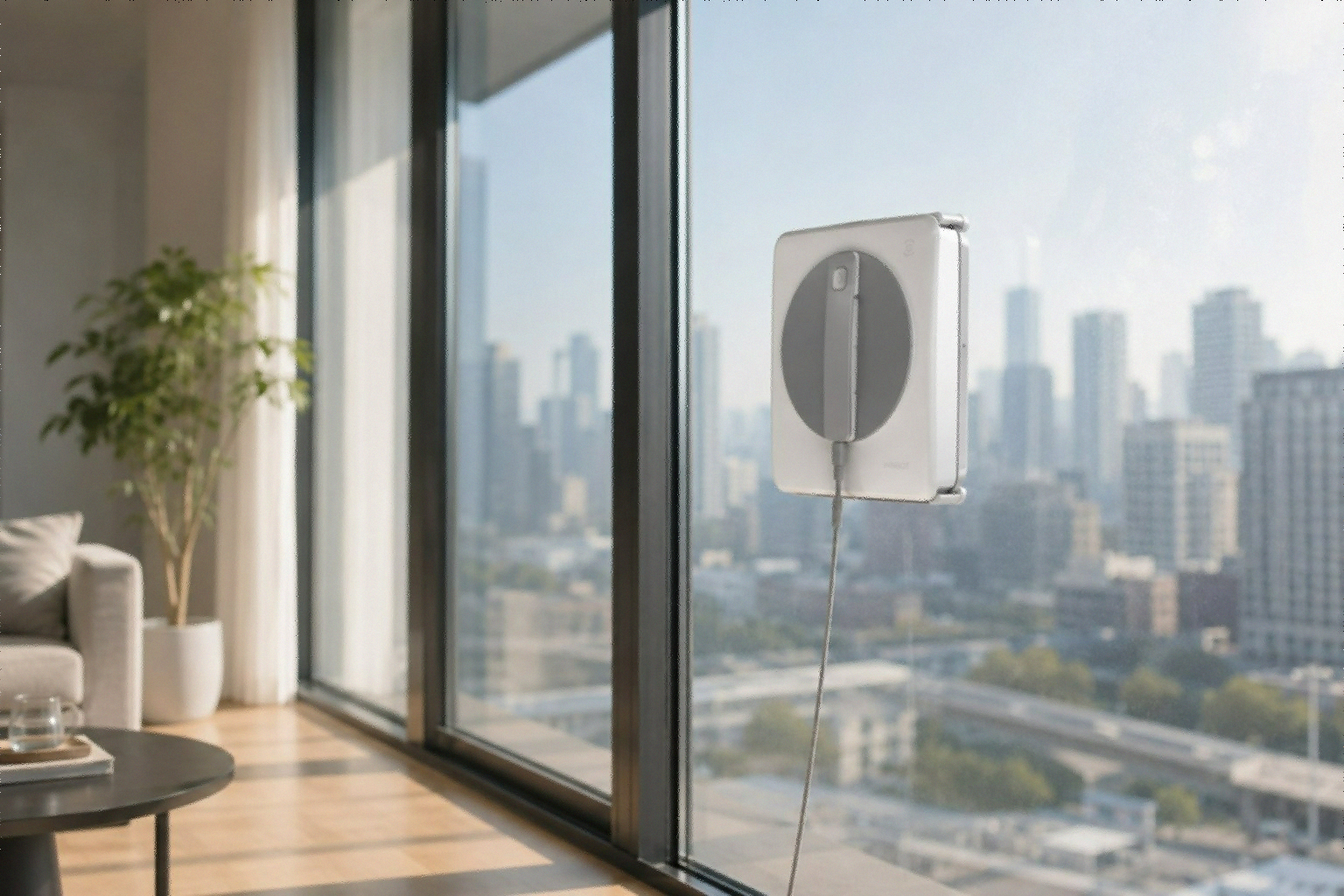
Cleaning at height is inherently risky, even when working indoors – the top edges of windows are often out of reach, and without proper safeguards, it poses a hazard to the household. Therefore, safety is paramount for any window‑cleaning robot and must be multi‑layered. The WINBOT 880 comes with four layers of protection: in addition to the fan suction, it includes a power‑failure backup system – even if the plug is accidentally pulled, the robot remains securely attached for over 30 minutes while emitting an audible alert. Multiple sensors and a bumper guard automatically detect the edges of the glass to keep the unit stable, and a safety tether provides the ultimate failsafe against accidental drops.
3) Reusable and Low Long‑Term Cost
Another clear benefit is reusability. After moving into a newly renovated home, you’ll want a thorough cleaning, and then at least one or two deep cleans per year to keep windows sparkling. The annual cost of hiring professionals is not trivial. A window‑cleaning robot, by contrast, typically costs around $300 (the WINBOT 880 is priced at about $280, roughly equivalent to two professional cleaning visits). That makes it far more economical – and you can clean your windows anytime you like, without extra expense.
Conclusion
Technology has transformed window cleaning into a simple, convenient task. If you’re still stuck with a traditional rag and bucket, it’s time to discover the window‑cleaning robot – let smart devices truly serve your daily life.