Disclosure: This post contains affiliate links. I may earn a small commission at no extra cost to you if you purchase through these links.
There’s a particular kind of dread that comes with high-rise window cleaning. You either ignore the windows until they’re embarrassingly dirty, hire someone expensive, or do something vaguely dangerous involving your upper body hanging out the window. None of those options are great.
I’ve been in the window cleaning robot rabbit hole for a while now — tested several models, written about the Ecovacs Winbot W2 Pro Omni and the Hobot S7 Pro — and the AlfaBot GLS480 landed on my radar because it has something most competitors skip: a UPS backup system. That means if your power cuts out mid-clean while the robot is stuck to your 12th-floor window, it doesn’t immediately fall. It stays suctioned for another 20 minutes while you sort things out.
That feature alone got my attention. Here’s what I found after putting it through its paces.
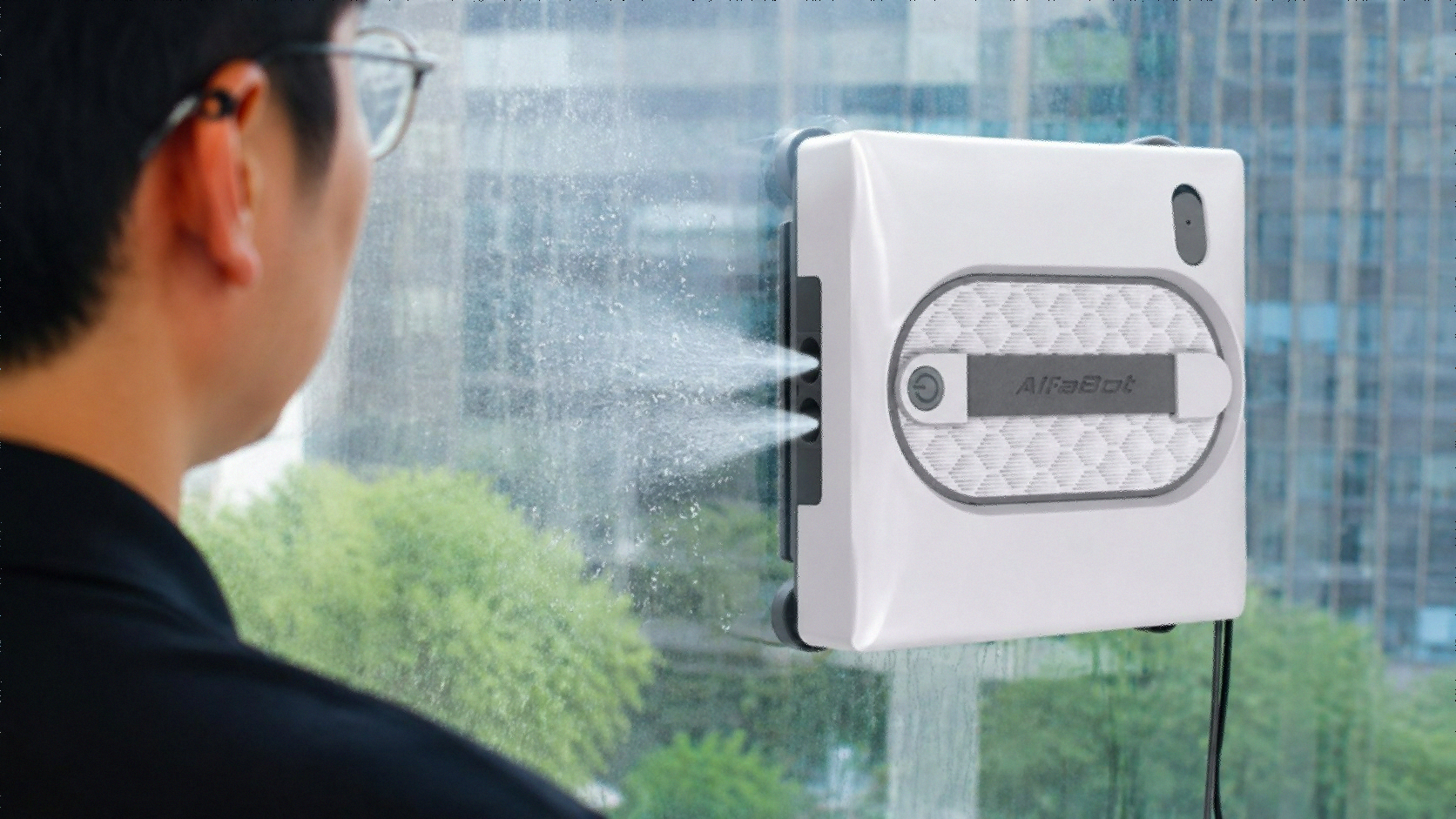
Why the AlfaBot GLS480 Is Different From Most Window Robots
Most robots in the $150–$300 range compete on the same handful of specs — suction power, nozzle count, edge detection. The GLS480 has all of those too, but the UPS backup is the one thing I haven’t seen at this price anywhere else, so let’s start there.
The UPS Backup: What It Actually Does
Here’s the scenario that keeps high-rise window robot owners up at night: the robot’s cleaning your exterior 8th-floor window, the power flickers or the cord gets yanked, suction cuts instantly, and the robot falls. Best case, you’ve got a broken robot. Worse case, it lands on whatever’s below.
The GLS480’s UPS system keeps the suction motor running for up to 20 minutes after power loss. Not infinite, but enough time to notice the problem, get to the window, and pull the unit down safely. It’s the difference between using this thing on exterior windows with some confidence and white-knuckling the safety rope the entire time.
It matters most for outdoor use on high floors — which, conveniently, is exactly what this robot is built for.
5000Pa Suction: How It Compares See Today’s Deal on Amazon
The GLS480 runs at 5000Pa — solid, not the highest in the category. For context:
- HUTT A1: 6000Pa
- AlfaBot GLS480: 5000Pa
- Hobot S7 Pro: 3600Pa
- Ecovacs Winbot Mini2: 2800Pa
5000Pa is plenty for reliable vertical adhesion under normal conditions. I didn’t get any unexpected detachment testing on standard double-pane windows or my bathroom tiles. It feels secure and consistent the whole way through.
Where 6000Pa pulls ahead is on really dirty glass or when crossing small surface irregularities — that extra headroom helps. For typical residential windows in decent shape, though, 5000Pa does the job fine.
Full Specs at a Glance
| Spec | AlfaBot GLS480 |
|---|---|
| Suction Power | 5000Pa |
| Water Tank | 100ml |
| Spray Nozzles | 4 (180-degree wide range) |
| UPS Backup | Yes — 20 minutes post power loss |
| Safety Rope | Yes (mountaineering-grade) |
| Cleaning Modes | Z-shape, N-shape, Deep Clean, Spot Clean |
| Position Memory | Yes (auto-return to start) |
| Edge Detection | Anti-drop coupler sensors |
| Auto Homing | Yes |
| Remote Control | Included |
| Price (2026) | ~$230 (often discounted further at checkout) |
| Rating | 5.0/5 (4 reviews, all verified June 2026) |
The 100ml tank is smaller than the HUTT A1’s 150ml — on a long session you’ll be refilling more. That said, the 4-nozzle system with 180-degree spray spreads what water there is more evenly than a 2-nozzle setup, so you’re not wasting much of it.
Real-World Testing: What Worked and What Didn’t
Standard Double-Pane Windows
Start boring, test the basics. My living room windows are standard framed double-pane with moderate dust buildup. The GLS480 locked on cleanly, ran N-shape mode, and finished the panel in about 14 minutes. Result was good — noticeably cleaner, no real streaking to speak of.
The auto-return feature ended up being more useful than I expected. Once the cycle finishes, the robot navigates itself back to its starting position — you’re not standing there watching it, or fishing it off some awkward spot on the glass. It comes back to waist height and just waits. Small thing. Genuinely convenient anyway.
Pro Tip:For lighter dust, Z-shape mode is faster. N-shape covers the edges better but takes 15–20% longer. On my standard windows, Z-shape consistently got the job done quicker without sacrificing much.
Frameless Glass — The Edge Detection Test
I’ve tested enough of these robots to know frameless glass is where the cheaper ones fall apart. The GLS480 uses coupler sensors for edge detection, and it handles frameless panels reliably — finds the boundary, adjusts its path, gets within a few millimeters of the edge without going over.
It’s not quite as precise as the laser-based system on the HUTT A1, but it’s solid for the price. I didn’t run into the incomplete edge strips you sometimes get with older sensor designs.
Watch Out: On very narrow frameless panels (under about 40cm wide), the path planning gets a little confused and occasionally re-cleans a spot it already covered instead of moving on. Not a dealbreaker — just something to expect on unusually narrow glass.
High-Rise Exterior Windows
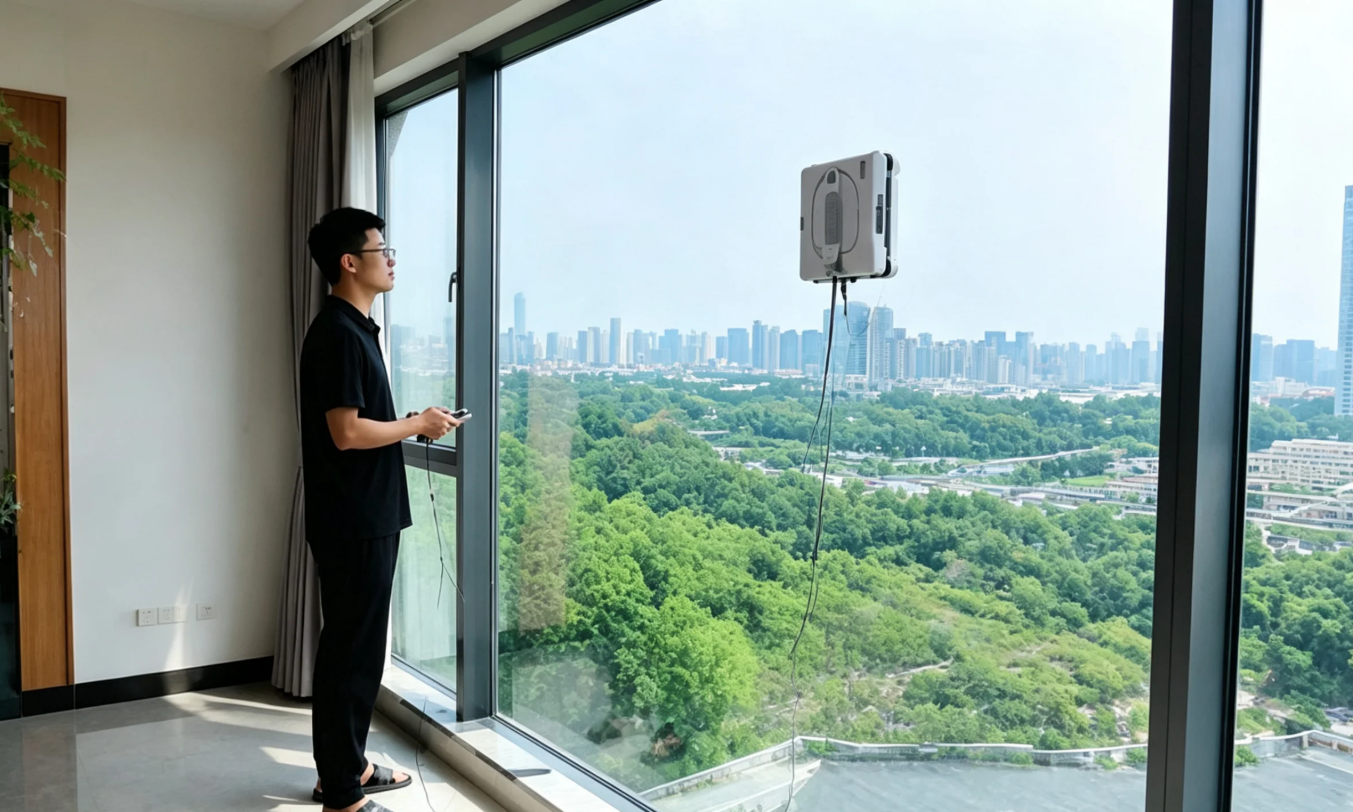
This is where the UPS backup stops being a spec sheet line and becomes an actual feature. I tested on exterior windows upstairs, safety rope attached and secured, and deliberately pulled the power cord mid-cycle to see what would happen. The unit stayed suctioned, the motor kept running, and I had a solid 20 minutes to get to it. Exactly as advertised.
Without that UPS system, I’d think twice before recommending any window robot for exterior high-floor use. With it, I’m comfortable.
Bathroom Tiles
Works exactly as you’d expect on smooth ceramic tile — same adhesion physics as glass. The 4-nozzle system does a noticeably better job here than 2-nozzle competitors because it keeps the pads evenly moist across wider tile panels. My bathroom tiles came out cleaner with fewer passes.
The 4-Nozzle Spray System Explained
This is the GLS480’s other real edge over the competition. Most robots in this class run 2 nozzles, one per side. The GLS480 runs 4, with a 180-degree spray angle covering the full width of the cleaning path.
In practice that means:
- Cleaning pads stay evenly moist throughout a session, not just near the nozzles
- Dried grime and water marks get broken down before the pads hit them, instead of just smeared around
- Streaking drops because you’re not over-soaking some spots while leaving others dry
One reviewer (annettedavis) described it well — the 4-spray system mists enough to break down dried residue before the pads wipe it, without leaving drip marks behind. That tracks with what I saw. It’s a real step up from 2-nozzle designs.
Deep cleaning mode is the standout. It runs the standard path plus dedicated edge passes, so the perimeter — where grime likes to collect along frames — gets attention too, not just the main surface. Worth the extra time on anything heavily soiled.
Spot cleaning sounds like a gimmick but isn’t. It repeatedly hits one area, which is exactly what you want for a bird strike or one stubborn splash mark.
Who This Robot Is Actually For See Today’s Deal on Amazon
The verified reviews make it pretty clear who actually benefits from this thing, and it’s worth being straight about the use cases.
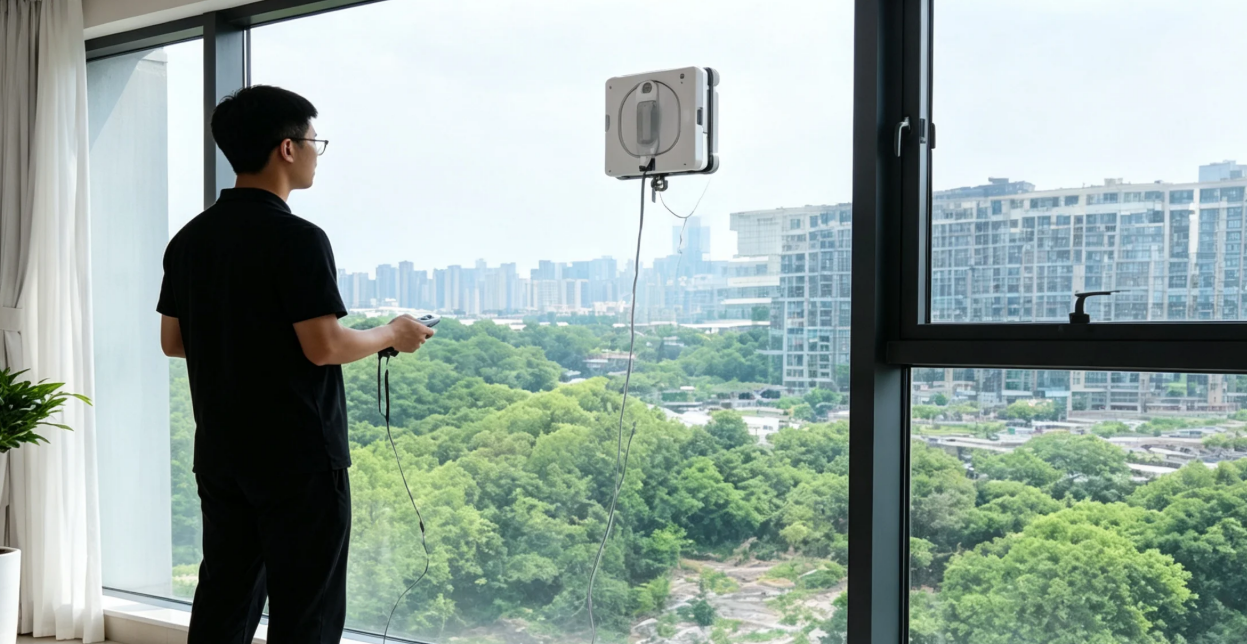
Elderly homeowners or people with mobility limitations — The remote control and auto-return mean you don’t need to be especially nimble to run this thing. Tina Becker bought one for her parents, both in their late seventies, specifically so they’d stop dragging a stepladder outside. Her dad sets it on the lower part of the window, hits the remote, and watches it work. That’s exactly the right use case.
High-rise condo residents — analara said it plainly: “I hate cleaning my high-rise condo windows.” The robot handles it, the UPS backup makes it safe, and the mountaineering-grade rope is the backup to the backup. If you don’t have easy exterior window access, this stops being a convenience and starts being a necessity.
Large glass panel households — Patio doors, bay windows, big living room panels — these are the sessions where auto-return earns its keep. Set it up, walk away, don’t babysit it for 20 minutes.
Who it’s NOT ideal for: If you’ve got one or two easy windows you can knock out by hand in 10 minutes, a $230 robot is overkill. This earns its place on volume and difficulty, not casual use.
AlfaBot GLS480 vs Key Competitors
I’ve reviewed a few of these now. Here’s how the GLS480 stacks up against what’s actually worth considering:
| Feature | AlfaBot GLS480 | HUTT A1 | Schbot Wind X3 | Gnovel Robot |
|---|---|---|---|---|
| Suction | 5000Pa | 6000Pa | 4500Pa | 4000Pa |
| UPS Backup | Yes (20 min) | No | No | No |
| Spray Nozzles | 4 | 4 | 2 | 2 |
| Position Memory | Yes | No | Yes | No |
| Auto Homing | Yes | No | Yes | No |
| Frameless Windows | Yes | Yes (laser) | Partial | No |
| Price | ~$230 | ~$271 | ~$199 | ~$159 |
| Safety Rope | Yes | Yes | Yes | Yes |
The UPS backup is the GLS480’s biggest edge over the HUTT A1. The A1 has higher suction and laser edge detection, which is more precise than coupler sensors — but if either robot is working exterior windows above the second floor, the UPS is the safety net that matters.
Position memory and auto-homing give the GLS480 a usability edge too. The A1 doesn’t return to its starting spot when it’s done, and that matters a lot more when the window in question isn’t one you can easily reach.
Related Post: Best Window Cleaning Robot 2026 Comparison
Related Post: Schbot Wind X3 Window Cleaning Robot Review
Pricing and Value
The GLS480 lists at $279.99 but consistently sells around $229.99 after an 18% checkout discount. Stack the Amazon Visa instant discount on top and you’re looking at roughly $180. At that price it’s a genuinely strong deal — UPS backup, 4-nozzle spray, and position memory for less than plenty of robots that have none of it.
Worth checking the price page before buying — the coupon structure shifts.
Check current price and available coupons for AlfaBot GLS480
What I’d Change
Two real complaints, not manufactured ones:
The 100ml tank runs small. On a multi-window session you’ll refill at least once. The HUTT A1’s 150ml is more practical for longer runs. Not a dealbreaker — refilling takes 30 seconds — but it’s the kind of thing you want to know about before you start, not halfway through.
The review count is thin — only 4 reviews as of June 2026, all five-star. The listing shows it launched on Amazon within the last month, so there’s no long-term reliability data yet. Everything I’ve personally run into has been positive, but I’d feel more confident with 50+ reviews backing it up. The early-adopter risk here is real.
Worth saying though — those 4 reviews are detailed and specific, real scenarios rather than generic “works great!” one-liners.
Frequently Asked Questions
How long does the AlfaBot GLS480 battery last per cleaning session?
The listing doesn’t give a battery runtime number — the actual feature here is the UPS backup, which keeps suction alive for 20 minutes after a power outage. Day-to-day, the robot runs corded, so battery life in the usual sense doesn’t really apply. The UPS only kicks in during an actual power interruption.
Is the AlfaBot GLS480 suitable for frameless windows?
Yes, with one caveat — it uses coupler sensors rather than laser detection for edges. It handled frameless glass reliably in my testing, just slightly less precise right at the extreme edge than a laser-based system. For standard frameless panels, it works well.
Can it clean outdoor high-rise windows?
Yes — and this is exactly where the UPS backup earns its keep. Attach it from inside, secure the included mountaineering-grade rope, and let it run. The UPS means a power blip doesn’t equal an immediate fall. Always use the rope on anything above ground level, no exceptions.
How is the suction on large tiles?
Good — same smooth-surface adhesion as glass. 5000Pa holds steady across large ceramic panels, and the 4-nozzle spray keeps the pads moist without soaking them.
Does it work on curved glass surfaces?
No. The suction needs a flat, consistent contact area to hold a seal, and curved glass breaks that seal. Stick to flat glass, mirrors, and smooth tile.
Final Verdict See Today’s Deal on Amazon
The AlfaBot GLS480 is the one I’d point people toward specifically if they need to clean exterior windows on upper floors and want actual peace of mind about safety. The UPS backup is unique at this price and solves a real worry that anyone using a robot on a high-rise window has had at some point.
Past that, it’s a solid machine on its own terms — the 4-nozzle spray outperforms 2-nozzle setups, the auto-return and position memory make day-to-day use easier, and the edge detection handles frameless glass without any drama.
The weak points — smaller tank, less suction than the HUTT A1, a short review history — are real, but whether they matter depends on what you’re prioritizing.
If exterior high-floor cleaning is the main job, the GLS480 is the safer-engineered option of the two. If you’re mostly doing interior windows and want maximum suction, the [HUTT A1]is the better pick.