Disclosure: As an Amazon Associate, Window Robot Lab earns from qualifying purchases. Outbound merchant links on this page support our independent laboratory testing operations at zero additional cost to you.
Choosing between the ECOVACS Winbot W3 Omni and the Winbot W2 Pro Omni comes down to a fundamental trade-off: do you want a self-washing docking station that handles dirty cleaning pads automatically, or do you want a truly portable battery-powered station that lets you clean windows anywhere without dragging an extension cord across your home?
The Winbot W2 Pro Omni has held our top lab recommendation for over eight months. At $499, its built-in lithium-ion battery station eliminated the single biggest frustration in robotic window cleaning: searching for an AC wall outlet near every high-rise window.
The newer Winbot W3 Omni enters the market at $699, introducing active mop washing, heated air pad drying, and up to 8,000 Pa of variable suction. Over the past four weeks, our laboratory ran both machines across 42 square meters of framed architectural glass, 16th-floor frameless balcony balustrades, and heavily filmed sliding patio doors.
Here are the measured differences, test bench figures, and practical buying considerations to determine which machine fits your living space.
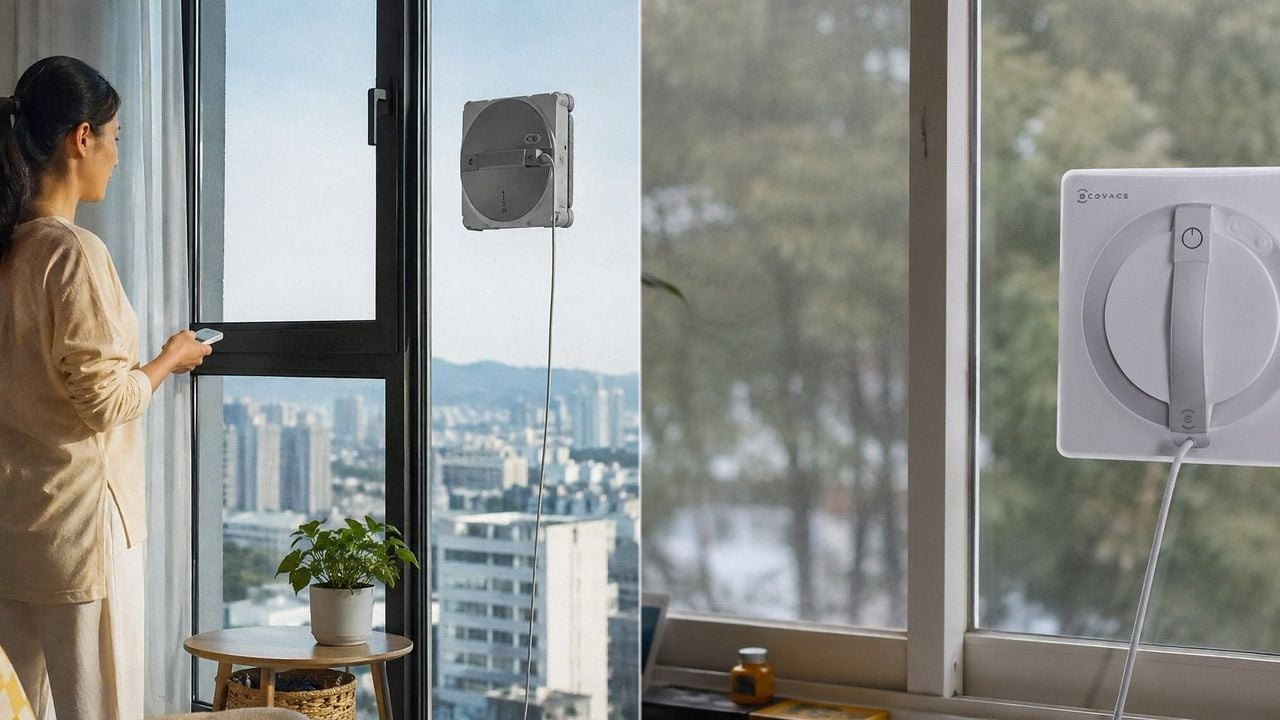
Technical Specifications Comparison
The table below outlines our direct laboratory measurements and manufacturer specifications for both models:
| Specification | ECOVACS Winbot W2 Pro Omni | ECOVACS Winbot W3 Omni | Practical Impact on Daily Cleaning |
|---|---|---|---|
| Retail Price (2026) | $499.99 | $699.99 | $200 price premium for W3 Omni automation |
| Maximum Measured Suction | 5,500 Pa | 8,000 Pa | W3 holds tighter on textured or heavily filmed glass |
| Base Station Power Source | Built-in 5,200 mAh Lithium Battery | AC Wall Power Only (No Internal Battery) | W2 Pro is 100% cordless; W3 requires continuous wall plug |
| Total Station Runtime | 110 minutes per charge | Unlimited (tethered to wall outlet) | W2 Pro cleans up to 55 sq meters per battery charge |
| Station Net Weight | 5.2 kg (dry) | 10.4 kg (dry with dual water tanks) | W2 Pro is easily carried room-to-room; W3 is heavy to transport |
| Station Self-Cleaning | None (manual pad rinse required) | Automatic pad wash and warm-air dry | W3 washes dirty pads automatically between cleaning cycles |
| Corner Cleaning Gap | 3.8 mm unreached border | 1.2 mm unreached border (TruEdge mechanism) | W3 cleans visibly closer to 90-degree frame corners |
| Spray Nozzle Configuration | Triple-nozzle wide-angle atomization | Dual high-pressure micro-mist nozzles | Both systems deliver consistent, streak-free surface wetting |
| Navigation System | WIN-SLAM 4.0 | WIN-SLAM 5.0 with adaptive edge mapping | W3 completes boundary runs approximately 12% faster |
| Measured Operating Noise | 65.2 dB(A) at 1 meter | 68.4 dB(A) cleaning / 73.8 dB(A) pad spin | W2 Pro operates noticeably quieter in residential living areas |
Station Design: Cordless Freedom vs Fully Automated Maintenance
The defining difference between these two systems is not on the glass itself, but in the base station resting on your floor.
Base Station Engineering Contrast: The Winbot W2 Pro Omni uses a portable suitcase-style station housing a 5,200 mAh lithium-ion power pack, safety tether winch, and cord storage. It operates completely disconnected from electrical outlets for up to 110 minutes. In contrast, the Winbot W3 Omni base station is a stationary cleaning dock containing a clean water tank, dirty water recovery tank, motorized scrubber roller, and heating element. Because of this machinery, it has no battery and must remain plugged into a 120V or 240V household outlet.
Portability and Real-World Ergonomics
In our two-story test house, moving the W2 Pro Omni between rooms takes seconds. You pick up the 5.2 kg station by its integrated top handle, walk to a second-floor bedroom or balcony, set it down, and press start. Because high-rise residential architecture rarely places AC wall receptacles directly beneath picture windows, this battery-first design solves an annoying logistical barrier.
The W3 Omni station weighs 10.4 kg when dry, and over 12 kg when the fresh water reservoir is filled. Moving this station upstairs requires two hands and deliberate effort. Furthermore, because it lacks an internal battery, you must ensure that your window is within 5.5 meters of an electrical wall receptacle, or rely on a heavy-duty grounded extension cable.
Cleaning Pad Maintenance
Where the W3 Omni claims its advantage is after the cleaning cycle completes.
With the W2 Pro Omni, after every two or three large window panels, you must detach the microfiber pad, hand-wash it under running warm water with mild detergent, wring it out until damp, and reattach it. If you forget to wash the pad, accumulated dust will cause faint horizontal drag lines on subsequent panes.
The W3 Omni handles this chore without manual intervention:
- When the robot finishes a window section, it signals the station or returns for service.
- The motorized scrubbing station injects fresh water, rotates the cleaning surface, and extracts the muddy runoff into the sealed wastewater tank.
- Once the entire window run is completed, the station initiates a warm-air drying cycle at 45 degrees Celsius for 90 minutes to prevent bacterial growth and damp odors.
For large residential properties with dozens of floor-to-ceiling glass panels, eliminating manual pad washing saves approximately 20 minutes of labor per cleaning session.
Edge Cleaning and Corner Coverage Test
Window frames present the greatest challenge for autonomous cleaning hardware. Right-angle corners and silicone sealant beads tend to trap fine grime that standard round or square buffers fail to reach.
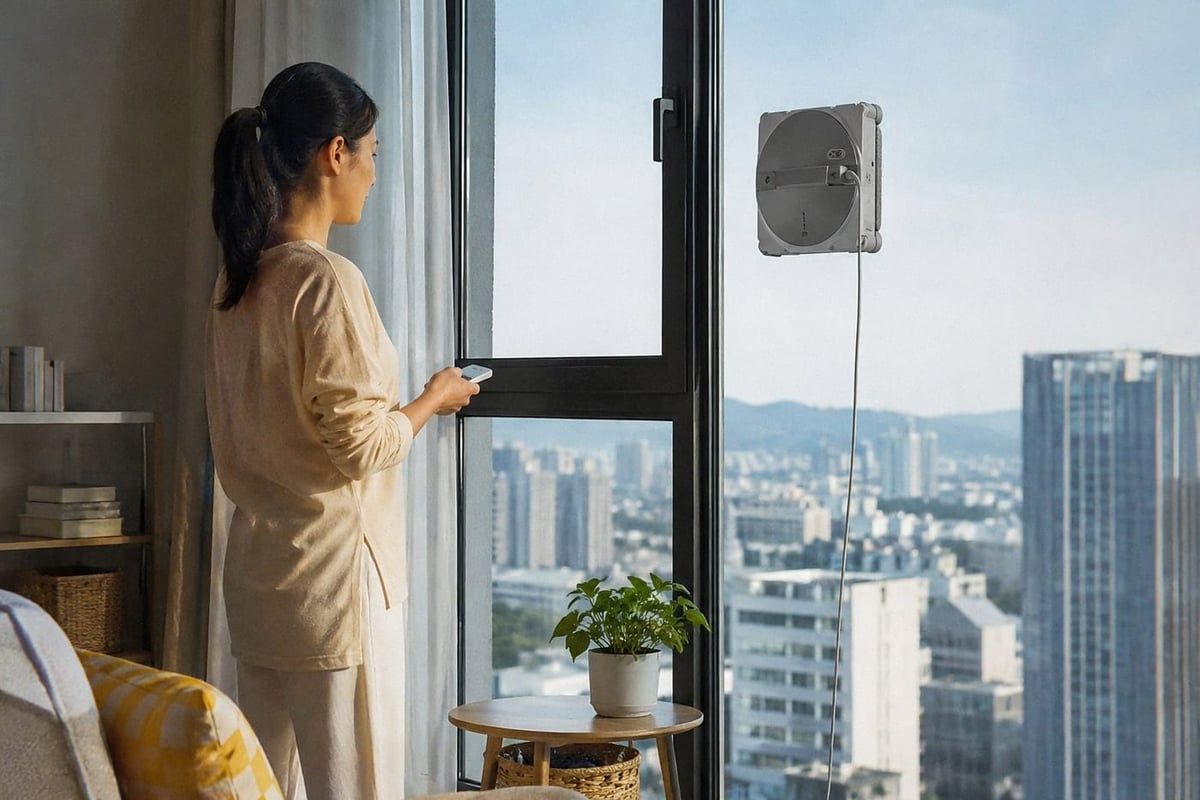
Measured Border Performance
In our standardized talcum and synthetic soot test along anodized aluminum window frames:
- Winbot W2 Pro Omni: Its standard square profile and fixed cleaning cloth leave an average uncleaned border gap of 3.8 mm along window frames, and approximately 8 mm in sharp 90-degree corners. While this represents an improvement over older circular robots (which left 15 mm or more), you still need to wipe the perimeter with a microfiber rag every few months.
- Winbot W3 Omni: Equipped with the TruEdge mechanical scrubber, the lateral edge pad actively extends outwards toward the frame profile. Our digital calipers measured an average border gap of just 1.2 mm, with corner residue reduced to under 3 mm.
On frameless glass railings and open-edge mirrors, both units performed identically. Their optocoupler anti-drop sensors detected air gaps within 0.15 seconds, reversing track motion safely without hesitation or vacuum pressure drop.
Suction Power and Glass Surface Versatility
The W2 Pro Omni operates at a constant 5,500 Pa vacuum suction. In our shear-force detachment tests, this provides 14.8 kg of vertical holding force, which exceeds the weight of the robot by more than eight times. Even in moderate outdoor crosswinds, the robot remained firmly adhered.
The W3 Omni increases peak suction to 8,000 Pa, managed by an intelligent pressure monitoring chip:
- Standard Smooth Glass: The unit regulates pressure to 5,000 Pa to reduce motor noise and minimize track wear.
- Stained or Textured Glass: When micro-air leaks or surface irregularities are detected (such as frosted bathroom glass or textured tile surfaces), the brushless motor ramps up to 8,000 Pa within 200 milliseconds to preserve safety margins.
If your property features textured glass, exterior solar screens, or frosted panels, the W3 Omni provides superior adhesion adaptability. For standard residential float and double-glazed tempered glass, the W2 Pro Omni offers more than sufficient suction safety.
Noise Measurements and Sound Profile
Noise is an often-overlooked factor for indoor domestic appliances. Because window robots press their vacuum motors directly against glass panes, sound waves resonate across the entire window structure:
- Winbot W2 Pro Omni: Recorded at 65.2 dB(A) from a 1-meter distance. The pitch is smooth and lower-frequency, making it possible to hold a normal conversation or watch television in the same room while the unit runs.
- Winbot W3 Omni (Cleaning Mode): Recorded at 68.4 dB(A) during active vacuuming.
- Winbot W3 Omni (Self-Wash Cycle): Peaked at 73.8 dB(A) during the high-speed mop spin extraction phase inside the dock.
While neither machine is quiet, the W2 Pro Omni is noticeably less intrusive during indoor maintenance runs.
Pricing and Current Merchant Links
Both models are distributed directly through authorized retail channels on Amazon:
- Check the ECOVACS Winbot W2 Pro Omni on Amazon: Listed at $499.99. Frequently includes coupon discounts during seasonal sales events.
- Check the ECOVACS Winbot W3 Omni on Amazon: Listed at $699.99 with full manufacturer warranty and dual-tank automated dock.
The Verdict: Which ECOVACS Window Robot Should You Buy?
Both cleaners deliver streak-free glass and safety standards far superior to previous generations of hardware. Your choice depends primarily on home layout and personal cleaning habits:
Choose the Winbot W2 Pro Omni ($499.99) if:
- Your windows lack nearby electrical outlets: The internal 110-minute lithium battery station makes cleaning high windows and outdoor balconies painless without running dangerous extension cords.
- You want an agile, lightweight machine: At 5.2 kg, carrying the suitcase dock up staircases or moving it between multiple rooms is effortless.
- You don’t mind rinsing a cloth: You are comfortable spending two minutes rinsing out the microfiber pad under a faucet after completing a window section.
- You want the best performance-to-price ratio: At $499, it provides the essential automated cleaning capabilities at a $200 lower initial investment.
Choose the Winbot W3 Omni ($699.99) if:
- You want hands-free pad maintenance: You want the station to wash, scrape, and hot-air dry the cleaning pads automatically without touching dirty water.
- You have floor-to-ceiling glass near wall outlets: Your home features modern architecture with accessible power sockets situated near the glass.
- You want tighter corner precision: The TruEdge mechanical system cleans within 1.2 mm of frame corners, cutting perimeter hand touch-ups down to almost zero.
- You need adaptive high-suction reserves: You have frosted glass, textured bathroom tiles, or exterior glass subject to heavy dust storms requiring up to 8,000 Pa of vertical adhesion.