I bought this thing because I have a two-story wall of glass over a rocky slope, and the last time I climbed a ladder to squeegee it I spent twenty minutes telling myself I was going to die up there. Four hundred ninety-nine dollars felt like a lot for a gadget that cleans windows. After a month of actually using it, I’d call it fair — with some real caveats.
Contents
- The First Time It Grabbed the Glass
- How It Actually Cleans
- The Portable Station Is the Whole Trick
- Where It Leaves Streaks
- Noise, Cord, and the Little Annoyances
- Versus Just Hiring Someone
The First Time It Grabbed the Glass
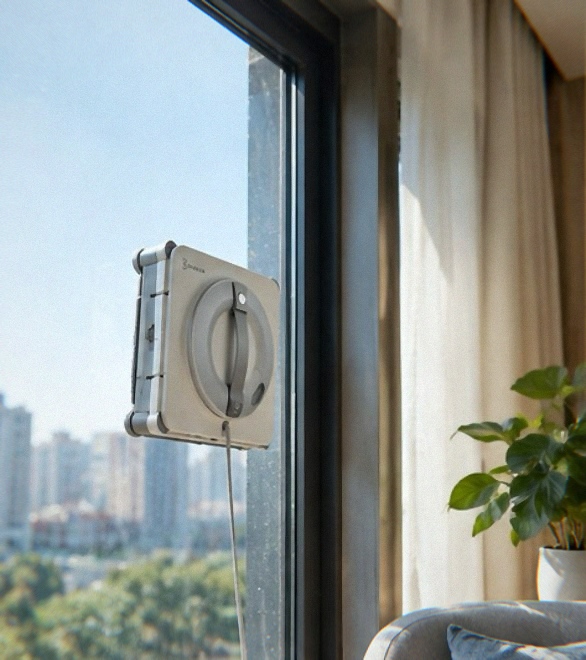
Unboxing is heavier than I expected. The bot itself has that dense, weighted feel — you can tell most of the mass sits low, which is the whole point. The suction cup base and the safety tether come in the box, and you will use the tether. I don’t care how confident you are. If this thing loses grip on a second-story pane, that tether is the only reason you’re not buying a replacement.
The first mount was awkward. You press it flat against the glass, wait for the fan to spin up and bite, then let go. That half-second between letting go and feeling it hold is genuinely nerve-wracking. It held. It’s held every time since.
How It Actually Cleans
It does a zigzag pass and sprays a fine mist of cleaning solution as it goes. The microfiber pads on the bottom do the wiping. On a normal dusty window — pollen, road film, the grey haze that builds up over a couple weeks — it does a legitimately good job. Glass comes out clear, no smears, no leftover wet trails.
If you buy through a link here, I may earn a small commission. Doesn’t change your price.
What it won’t do is scrub. Bird droppings, dried bug guts, hard water spots — those it just smears around. I’ve started hitting the bad spots with a rag first, then letting the bot do the full pass. That combo works great. Expecting it to handle caked-on gunk on its own will disappoint you.
The Portable Station Is the Whole Trick
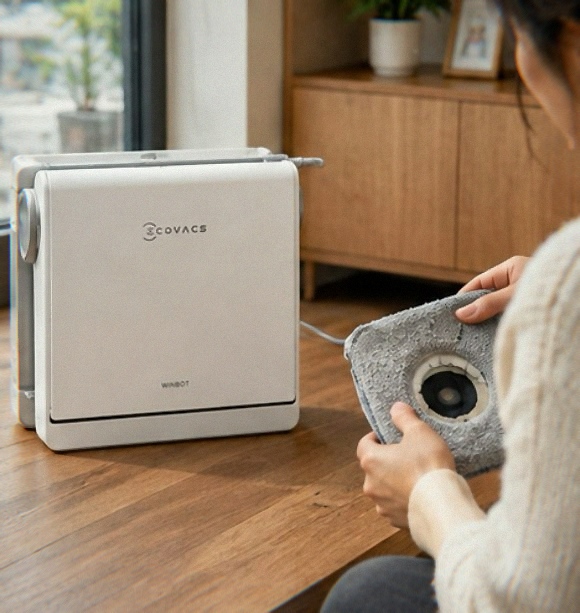
This is the part that sold me on the W2S PRO over the older WINBOT models. The Omni station holds the battery and the cleaning solution, and it’s what makes the bot cordless while it’s up on the glass. You carry the station to wherever you’re working, set it down, and the bot runs off its own power.
The station is smaller than I pictured — roughly the size of a small cooler — and it’s got a handle on top that actually balances well. Battery life gets me through my whole front wall (six large panes) on one charge with a little left over. The rear windows I do the next day.
One quirk: the solution tank has a little fill line you can barely see unless you’re in good light. I overfilled it the first time and got a dribble down the side of the station. Minor, but annoying.
Where It Leaves Streaks
Every window robot leaves edge streaks, and this one is no exception. The pads don’t quite reach the corners, so you get a two-inch border of untouched glass all the way around each pane. On a big window it’s barely noticeable. On a small bathroom window it’s basically half the surface.
I keep a squeegee in my back pocket and hit the edges after the bot finishes. Adds maybe thirty seconds per window. If that sounds like a dealbreaker, no window robot is going to make you happy.

Noise, Cord, and the Little Annoyances
It’s loud. Not leaf-blower loud, but you’re not having a phone call while it runs. The suction fan has a steady high whine, and when it changes direction on the glass you get a little chirp from the motors. Inside the house with the window closed, it’s a dull drone. Outside, it’s noticeable.
The power cord on the station is short. Like, surprisingly short — maybe six feet. If your outdoor outlet isn’t right where you’re working, you’re dragging an extension cord. I ended up buying a 25-footer just for this thing.
The pads themselves are easy to peel off and rinse. They go in the wash with regular laundry, no fabric softener. I’ve done maybe eight full cleaning cycles and the pads still look fine, though I bought a spare set because I hate being stuck mid-job.
Versus Just Hiring Someone
A window cleaner in my area charges about $180 for the whole house, inside and out. So the math is: three cleanings and the WINBOT pays for itself. If you clean your windows twice a year, you break even in eighteen months and everything after that is free.
But that assumes you enjoy doing it. If you’d rather pay someone and never think about it, the WINBOT is a $499 tool you’ll use twice and forget. If you’re like me — the kind of person who notices a streaky window every single morning — it’s worth every dollar.
Buy it if you’ve got high glass, a fear of ladders, and you’re willing to squeegee the edges yourself. Skip it if your windows are all ground-floor and reachable with a rag in thirty seconds.