Disclosure: This post contains affiliate links. I may earn a small commission at no extra cost to you if you purchase through these links.
I held off on buying a window cleaning robot for years. Always seemed like one of those gadgets that looks great on Amazon and ends up gathering dust in a closet by week two. Then I moved into a place with floor-to-ceiling windows on the third floor, and cleaning them turned into a genuine ladder-and-bad-decisions situation.
So I bought the HUTT A1. Six weeks in now. Here’s the rundown.
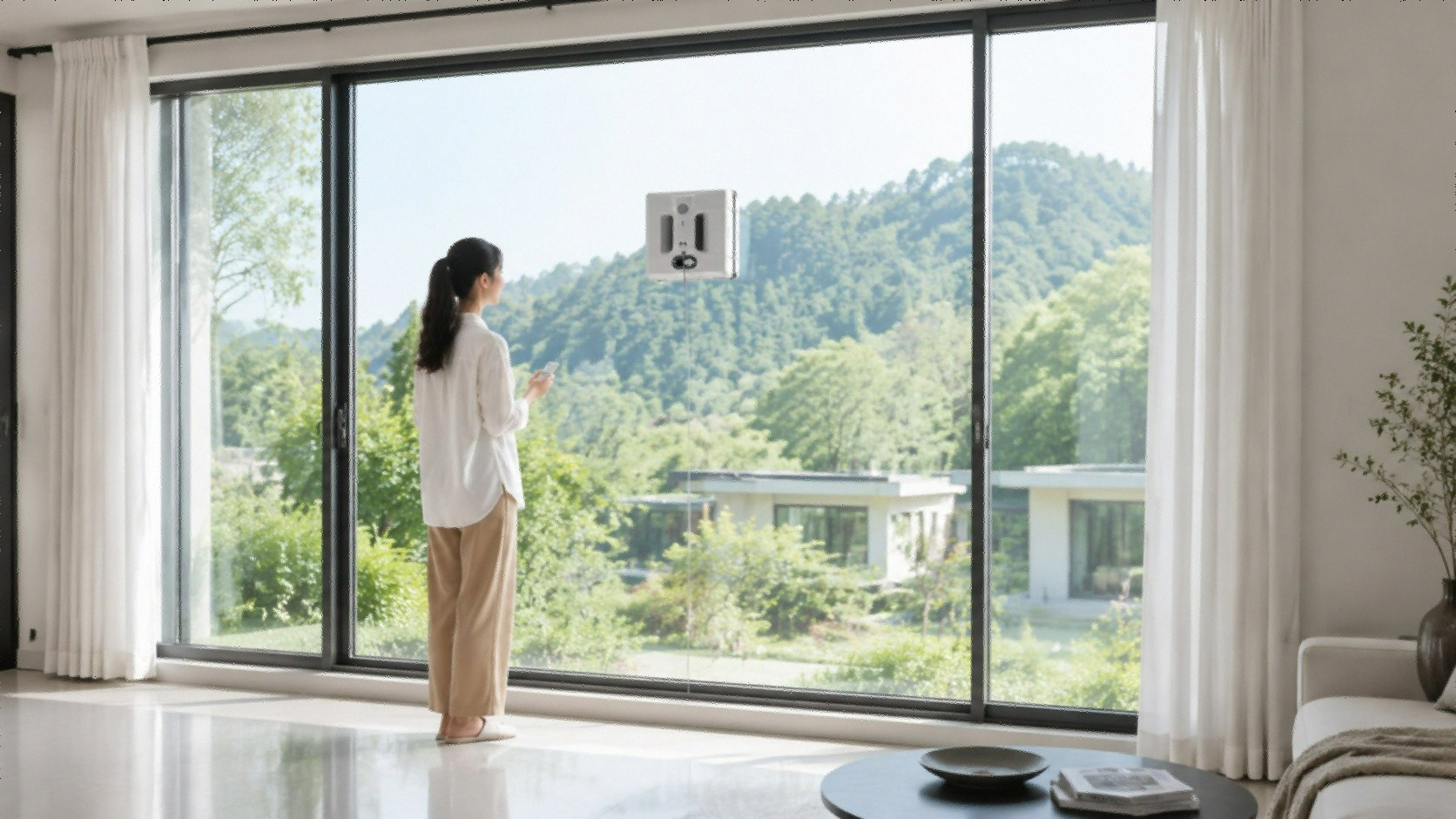
Why Window Cleaning Robots Are Finally Worth Considering in 2026
For years, window cleaning robots were kind of a punchline. Weak suction, awkward angles, mediocre results — you’d end up with streaky glass and a robot swinging from its safety rope. Not exactly the dream.
That’s changed more than I expected. Sensors got smarter, motors got stronger, and path planning improved enough that robots can now work frameless windows without losing their nerve at the edges. The HUTT A1 is a decent snapshot of where the category actually sits right now.
What Makes High Suction Actually Matter
These robots stick to glass with vacuum suction — same idea as those little suction-cup hooks in your shower, just scaled up. The A1 runs at 6000Pa, well above older models in this price range. More suction means a tighter grip, and a tighter grip means it can work vertical glass without slipping, wet or dry.
At that pressure, small surface inconsistencies barely register — dried water spots, light grime, the odd imperfection in the glass. Older robots running 3000–4000Pa would stall out or lose contact in those exact spots. This one just keeps going.
The Frameless Window Problem (And Why It Was a Real Issue)
Frameless windows — the kind where the glass just ends, no ledge, nothing to grab onto — used to be a nightmare for these robots. They’d hit the edge, the sensors would panic, and you’d be left with maybe 70% of a clean window before it backed off somewhere it considered safer.
Laser edge detection is the A1’s answer to that. It maps the glass boundary precisely enough to clean right up to the edge without going over it. I’ve run it on my frameless living room windows more times than I can count at this point, and it hasn’t messed up once.
HUTT A1 Full Specs Breakdown See Today’s Deal on Amazon
Before getting into how it actually performs, here’s what’s on the spec sheet:
| Spec | HUTT A1 |
|---|---|
| Suction Power | 6000Pa |
| Water Tank Capacity | 150ml |
| Spray Nozzles | 4 (upgraded from 2) |
| Battery | 650mAh |
| Battery Life | ~30 minutes |
| Moving Speed | 11 cm/s |
| Dust Removal Rate | 99% (claimed) |
| Safety Rope Capacity | Up to 145kg |
| Motor Type | Brushless (500+ hour lifespan) |
| Edge Detection | Laser sensor |
| Sensors Total | 13 (8 collision, 4 edge, 1 air pressure) |
| Cleaning Modes | N-shape, Z-shape, manual, repeat, spot |
| Surfaces Supported | Glass, mirrors, ceramic tiles, wood |
The 150ml tank supposedly covers 90 square meters per fill. Take that with a grain of salt — it depends entirely on how dirty the glass is. In my experience it’s good for 40–50 sqm of lightly soiled glass before you’ll want to refill. Anything grimier and you’ll burn through water faster.
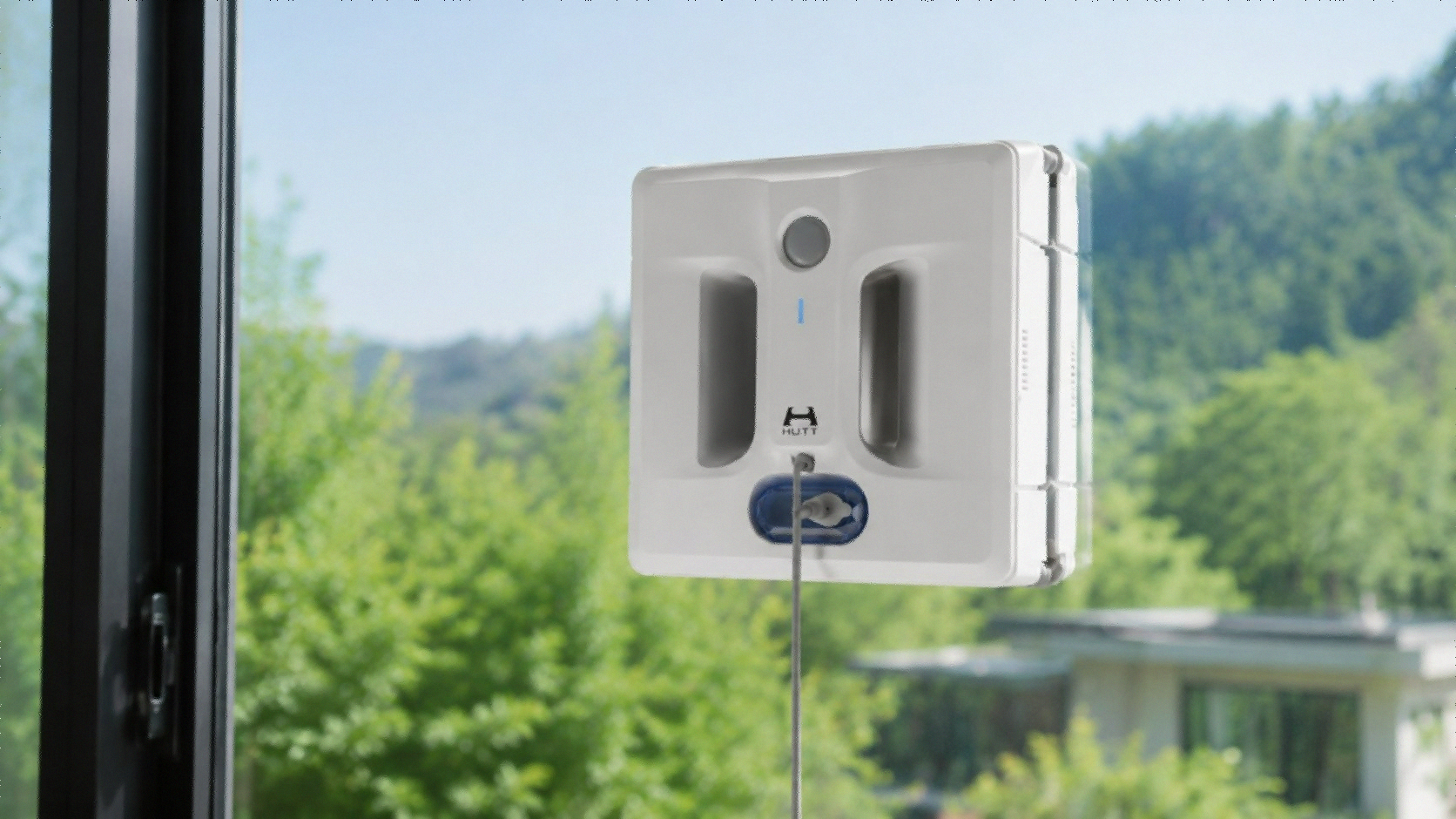
Real-World Performance: Six Weeks of Testing
The Sliding Glass Doors Test
First thing I ran it on was my sliding glass door — about 2 meters wide, full height, coated in weeks of dust and pollen. It locked on, started its N-shape route, and finished in roughly 18 minutes. The result was good — not quite squeegee-level streak-free, but noticeably better than what I’d been getting with a spray bottle and paper towels.
Pro Tip: A drop of dish soap in the water tank goes a long way. One German reviewer landed on a mix of 300ml distilled water, 40ml isopropyl alcohol, and a single drop of dish soap — I tried it, and it noticeably cuts down on streaking.
High Windows — The Actual Use Case
This is where the thing earns its price tag. Two windows in my bedroom need either a step ladder or some genuinely unsafe stretching to clean by hand. The A1 handles both with zero drama — stick it on, hit start, walk away. The 145kg-rated safety rope is reassuring too, even though I haven’t needed it; on an upper floor, you want that backup regardless.
Battery life is the real ceiling here. 30 minutes per charge gets you through 3–4 average windows, depending on size. After that it’s about an hour to recharge before you can pick up where you left off.
Ceramic Tiles and Shower Glass
Didn’t plan on using it here, but I did anyway — ran it over my shower glass on a whim one weekend. Came out great. Same with the bathroom tiles. Turns out it doesn’t really care what the surface is called, as long as it’s smooth and vertical.
Watch Out: Skip textured or matte glass entirely. The suction needs a smooth, consistent surface to hold, and it’ll slide right off anything with texture. Stick to standard glass and tile.
The Noise Factor
It’s not quiet. The motor runs at a steady hum, somewhere around bathroom-exhaust-fan territory. Not loud enough to interrupt a conversation, but you’ll know it’s running from the next room. Working from home with it on in the background is fine. Expecting silence is not.
N-shape covers most situations — efficient, systematic, does the job on a standard window. Z-shape makes more sense on wide horizontal glass where N-shape wastes motion. Spot cleaning earns its place too, mostly for bird strikes or whatever one-off mess shows up on a given day.
What the 13 Sensors Actually Do
Worth breaking down, because this is really why the A1 handles tricky spots better than cheaper robots in the same category:
8 Collision Sensors — Pick up the window frame and edges, keeping the robot from ramming into borders and nudging it back on course.
4 Edge Detection Sensors — The laser units doing the heavy lifting on frameless windows. They map exactly where the glass stops, down to a few millimeters.
1 Air Pressure Sensor — Tracks suction in real time and corrects in 0.03 seconds if pressure drops. This is the thing standing between you and a sudden fall when the robot crosses a small gap or rough patch.
If I had to point to one spec that matters most day-to-day, it’s that 0.03-second response time. Glass isn’t perfectly uniform — small gaps, slight warps, frame lips — and all of them cause brief pressure dips. At that response speed, the robot corrects itself before you’d ever notice anything was wrong.
HUTT A1 vs The Competition See Today’s Deal on Amazon
I’d also spent time with the Ecovacs Winbot W2 Pro and looked hard at the Hobot S7 Pro before settling on this one. Here’s how 2026’s lineup compares:
| Feature | HUTT A1 | Ecovacs Winbot W2 Pro | Hobot S7 Pro |
|---|---|---|---|
| Suction | 6000Pa | 2800Pa | 3600Pa |
| Water Nozzles | 4 | 2 | 2 |
| Battery Life | 30 min | 25 min | 35 min |
| Frameless Windows | Yes (laser) | Yes | Limited |
| Price (2026) | ~$271 | ~$350 | ~$280 |
| Safety Rope | Yes (145kg) | Yes | Yes |
| App Control | Basic | Full app | Full app |
The W2 Pro has a noticeably more polished app and sharper path planning, but you’re paying $80 more for it while getting less than half the suction. The S7 Pro is the closer match on paper, but it still struggles more with frameless glass. On raw cleaning power for the money, the A1 wins this comparison.
If app polish and smart-home integration matter to you, the W2 Pro premium might be worth it. If you just want clean windows without the fuss, the A1 gets you there for less.
Related Post: Best Window Cleaning Robot 2026 Comparison
Related Post: Ecovacs Winbot W2 Pro Omni Review
The One Legitimate Complaint
Battery life. 30 minutes covers a normal session fine, but if you’ve got a lot of glass — an open-plan place with big panels on multiple walls — you’re looking at several charging cycles, and the whole job stretches into half a day once you count the waiting.
HUTT did bump the moving speed by 30% (11 cm/s now) to help offset this, so it covers more ground per charge than earlier versions. Still, if your place has a lot of windows, you’re planning your cleaning around the battery, not the other way around.
What I’d Tell Anyone Considering This
$270 isn’t nothing. If your windows are easy to reach, a decent squeegee and some technique will cost you $15 and do just as well. This robot isn’t solving a problem for most people.
Where it actually makes sense:
- High windows you can’t safely reach without a ladder
- Lots of glass (high-rise apartments, big sliding doors, multiple large panels)
- Physically can’t clean windows yourself
- You just absolutely despise window cleaning and want to outsource it
For the first three, it earns its keep without much argument. The 4.6-star average across 74 Amazon reviews lines up with what I’ve seen — people buying it for genuinely hard-to-reach windows tend to walk away happy.
One reviewer, Zelda, put it better than I could: it works so well she couldn’t stop watching it. The downside, by her account, is that it didn’t save her any time, because she just stood there watching the whole thing. Fair enough.
Frequently Asked Questions
Does the HUTT A1 work on all window types?
Smooth glass, mirrors, ceramic tile, wood — all fine. Frameless windows work thanks to the laser edge detection. Textured, frosted, or matte glass is the one it can’t handle; the suction needs a smooth surface to hold.
How long does the battery last?
About 30 minutes on a full charge from the 650mAh battery. A full recharge from empty takes around an hour. Most residential windows fit into one charge cycle — larger spaces will need a couple of rounds.
Is the 145kg safety rope actually necessary?
For ground-floor or easy-reach windows, not critical. For anything above the first floor, where a fall could actually cause damage or hurt someone below, yes — use it every time. It’s included in the box, so there’s no reason not to.
Can it cross window frame gaps?
The 0.03-second pressure compensation handles small gaps — dividers between double-pane sections, slight lips in the frame. Anything wider than roughly a centimeter and it’ll stop or reroute instead of pushing through.
Does the 150ml water tank actually last for 90 square meters?
Roughly, on lightly soiled glass. Heavily soiled windows that need multiple passes will burn through it faster. The tank’s clear, so keeping an eye on the water level isn’t a hassle.
Final Verdict
The HUTT A1 is a solid window cleaning robot for the price. 6000Pa of suction is genuinely strong for this category, the 4-nozzle spray system covers more ground than the older 2-nozzle setups, and the laser edge detection handles frameless windows about as well as I’ve seen.
Battery life is the real constraint — 30 minutes per cycle means anything beyond a few windows takes some planning. And if smart-home integration matters to you, it’s not the most connected option out there.
For just getting windows clean, especially the ones you can’t safely reach on your own, it does the job consistently. A 4.6 average across 74 verified buyers tracks with that.
Check the current price for HUTT A1 on Amazon — frequently drops from its typical $284.99, and with the Amazon Visa instant discount, you can get it for around $220.