If you’ve ever leaned out of a high-floor window with a squeegee and immediately regretted it, you already understand why window cleaning robots exist. The harder question is which one to buy — because these three models sit within $200 of each other, share some of the same navigation technology, and are aimed at very different types of windows and users.
This comparison pulls from hands-on testing notes and verified Amazon owner feedback across all three models. No spec-sheet padding, no sponsored conclusions.
As an Amazon Associate, we may earn from qualifying purchases.

Quick Verdict
Three robots, three different jobs:
- Winbot W2 Pro Omni ($499) — Best overall. The portable battery station makes it the only window robot that works far from power outlets. Buy this if you have balconies, high-rise windows, or rooms without nearby sockets.
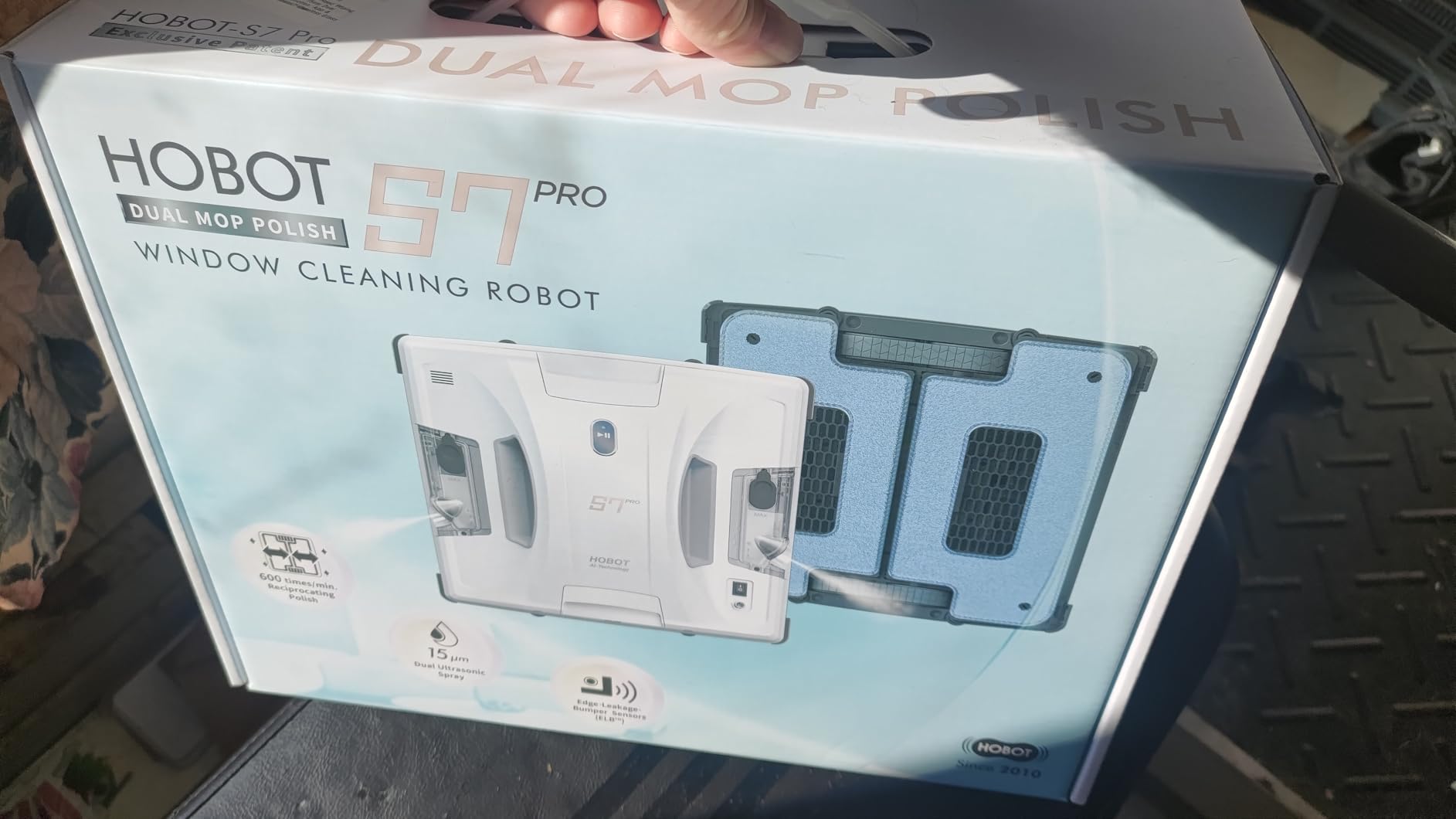
- HOBOT S7 Pro ($459) — Best for corners and frameless glass. Its square pad design physically reaches 90-degree corners that every round robot misses. Buy this if corners and edge cleaning matter to you.
- Winbot W2S ($319) — Best value. Same WIN-SLAM 4.0 navigation as the Pro Omni, lower price, cord only. Buy this if your windows are near outlets and you want the most capable robot for the money.
None of these is a set-and-forget device. All three require pad maintenance, correct cleaning solution, and a realistic understanding of what a robot can and cannot do on glass. Go in knowing that and any of these will serve you well.
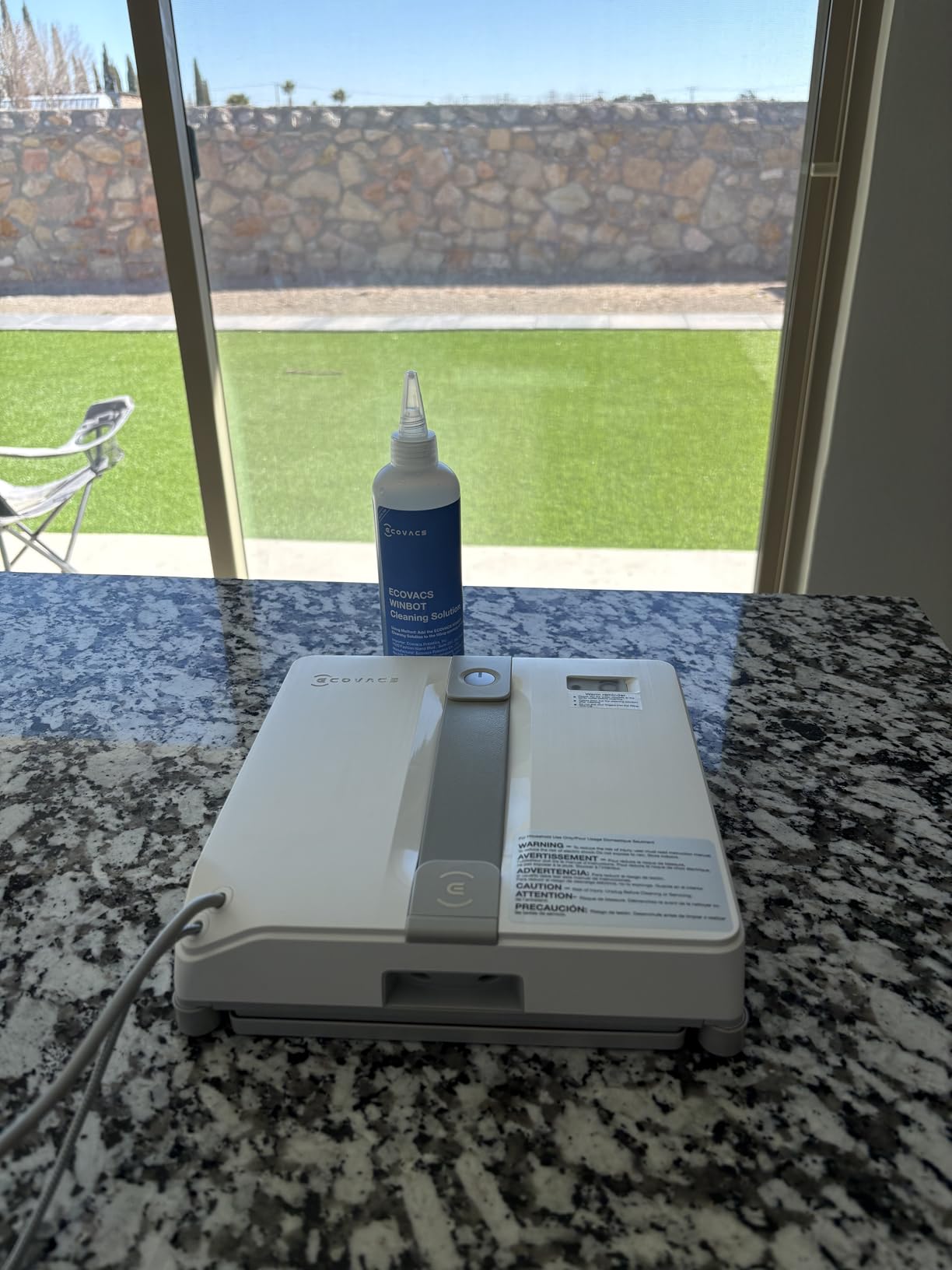
Key Specifications
| Feature | W2 Pro Omni | HOBOT S7 Pro | Winbot W2S |
|---|---|---|---|
| Price | $499.99 | $459.99 | $319 (from $399.99) |
| Power | Battery (110 min) + cord | Cord only | Cord only |
| Navigation | WIN-SLAM 4.0 | Proprietary path planning | WIN-SLAM 4.0 |
| Pad shape | Round | Square | Round + TruEdge |
| Water spray | Triple nozzle | Dual ultrasonic 15μm | Triple nozzle |
| Safety levels | 12-level | UPS + 230kgf tether | 10-level |
| Suction | Not published | 4800Pa | 8000Pa |
| Cord length | N/A (battery mode) | 4 meters | 26 feet |
| Amazon reviews | 223 (4.0★) | 35 (3.7★) | 45 (4.0★) |
| Monthly sales | 300+ | Not disclosed | 600+ |
The W2S’s 600+ monthly sales and Amazon’s Choice status tell you something real: it’s the robot most people end up buying, and most of them are satisfied. The W2 Pro Omni’s portable station is genuinely unique in this category. The HOBOT S7 Pro’s 4800Pa suction is the highest published figure among the three.
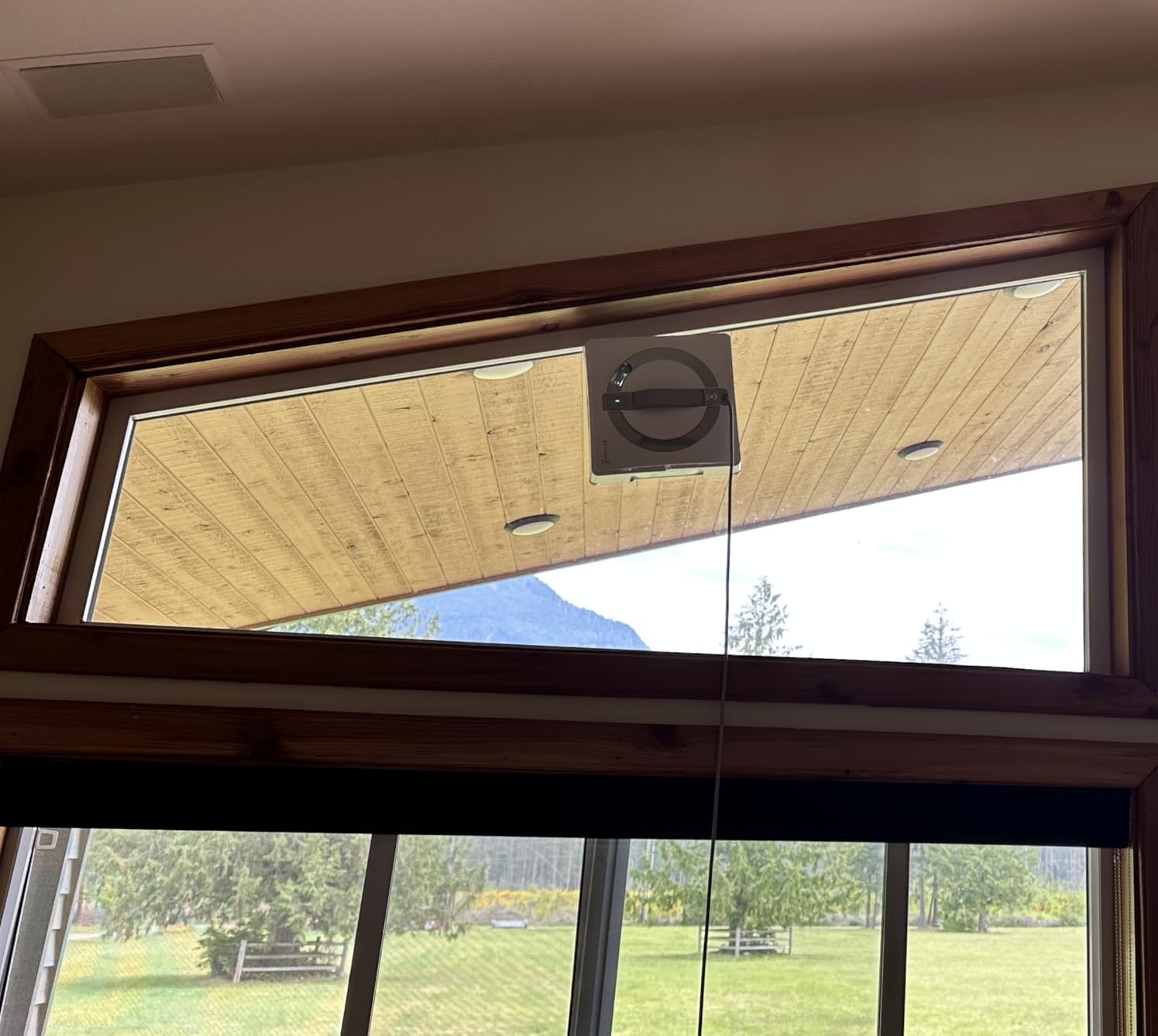
First Impressions
Winbot W2 Pro Omni arrives as a system, not just a robot. The Omni Station is a substantial box — it holds the robot, the water tank, and the battery — and the whole thing carries like a small toolbox. That portability is the point. It looks premium, feels solid, and the 6-in-1 station design makes it immediately clear this is a different category of product than a cord-dependent robot.
HOBOT S7 Pro is noticeably heavier than it looks in photos, at 3.7 lbs. The square body is distinctive — you can tell at a glance why it’s marketed for corner cleaning, because the pad shape makes geometric sense against a 90-degree window frame. The remote control is included in the box, which is a practical touch for manual repositioning without needing the app open.
Winbot W2S has a more compact footprint than either of the above. Out of the box the setup is straightforward — attach the pad, fill the water tank, plug in the cord, attach the safety tether. Several buyers note that the first session involves more fiddling than subsequent ones, which is consistent across all three models. The 26-foot cord is generous enough to reach most room configurations without an extension.
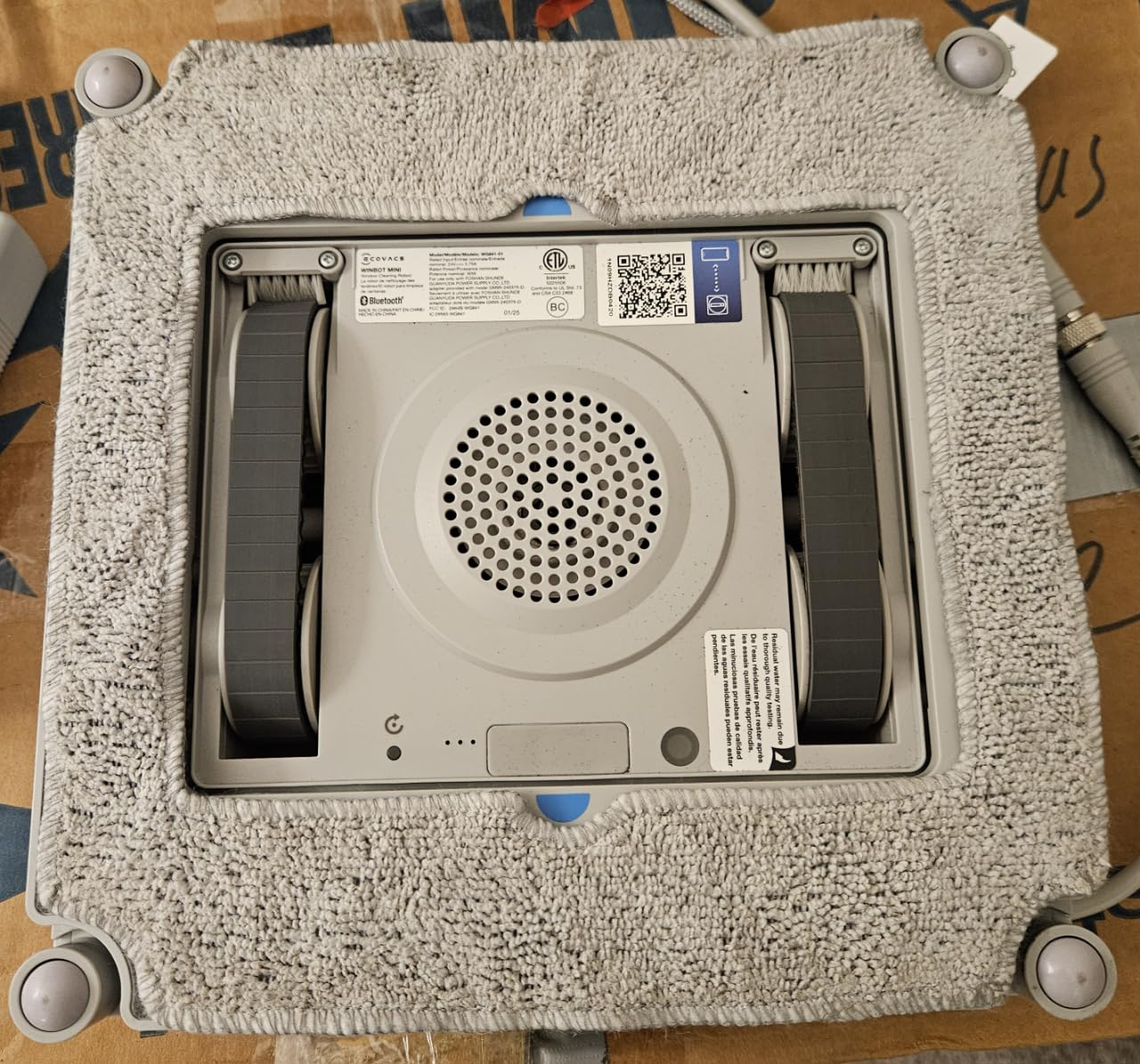
Setup and Daily Use
All three robots share a similar setup ritual: attach the cleaning pad, ensure the water reservoir is filled, connect the safety tether to a solid anchor point, place the robot on the glass, and let it start. The differences emerge in the details.
The W2 Pro Omni’s portable station means setup involves carrying one unit to the window rather than locating a power outlet and managing a cord. In a high-rise apartment with windows on multiple walls, this matters enormously — you’re not running extension cords through the living room for every cleaning session. Battery life at 110 minutes covers roughly 55 square meters per charge, which is several standard windows in a single session.
The HOBOT S7 Pro has the most involved setup of the three. Before first use, HOBOT recommends watching the setup videos linked on the Amazon listing — a buyer who spent 25 years in IT and robotics specifically flagged this as important. Every individual pane of glass requires repositioning the robot, which makes it labor-intensive on homes with many small windows but efficient on large picture windows. The 4-meter cord is longer than typical, reducing (but not eliminating) the outlet-proximity problem.
The W2S app gets consistent praise for the manual joystick function — the ability to steer the robot remotely when it ends up somewhere you can’t physically reach. This comes up in enough reviews to be worth flagging as a real use-case rather than a gimmick. WIN-SLAM 4.0 navigation plans the cleaning route systematically, and the 37% speed improvement over the previous generation is measurable: a standard window that took 5-6 minutes now takes 3-4.
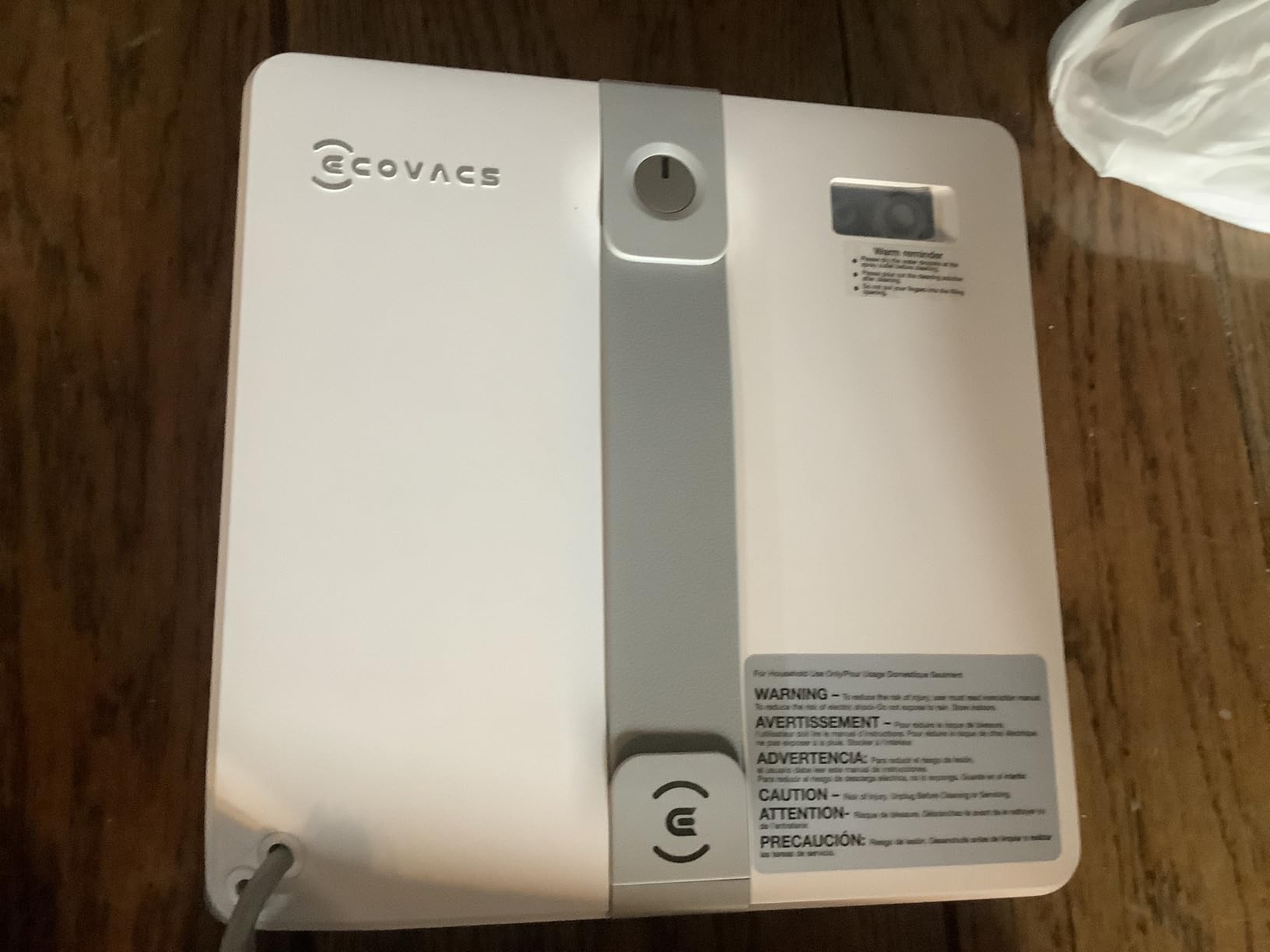
Cleaning Performance
Winbot W2 Pro Omni
The triple-nozzle sprayer with 100% more water pressure than the W1 Pro is one of the most consistently praised features in owner feedback. On standard maintenance cleaning — windows that get cleaned every few weeks — the results are genuinely impressive with minimal effort.
The critical thing that no marketing material mentions: change the cleaning pad after every single window pane, not every few. A buyer who cleaned 34 beachside windows learned this the hard way. When the pad gets dirty, the robot stops cleaning and starts redistributing wet grime. The robot ships with two pads. That’s not enough for a full session on a home with many windows. Order extra pads before you start.
WIN-SLAM 4.0 routing reaches the upper corners of windows that manual cleaning misses. That’s geometry, not marketing — a systematically planned route covers spots that hand-wiping skips.
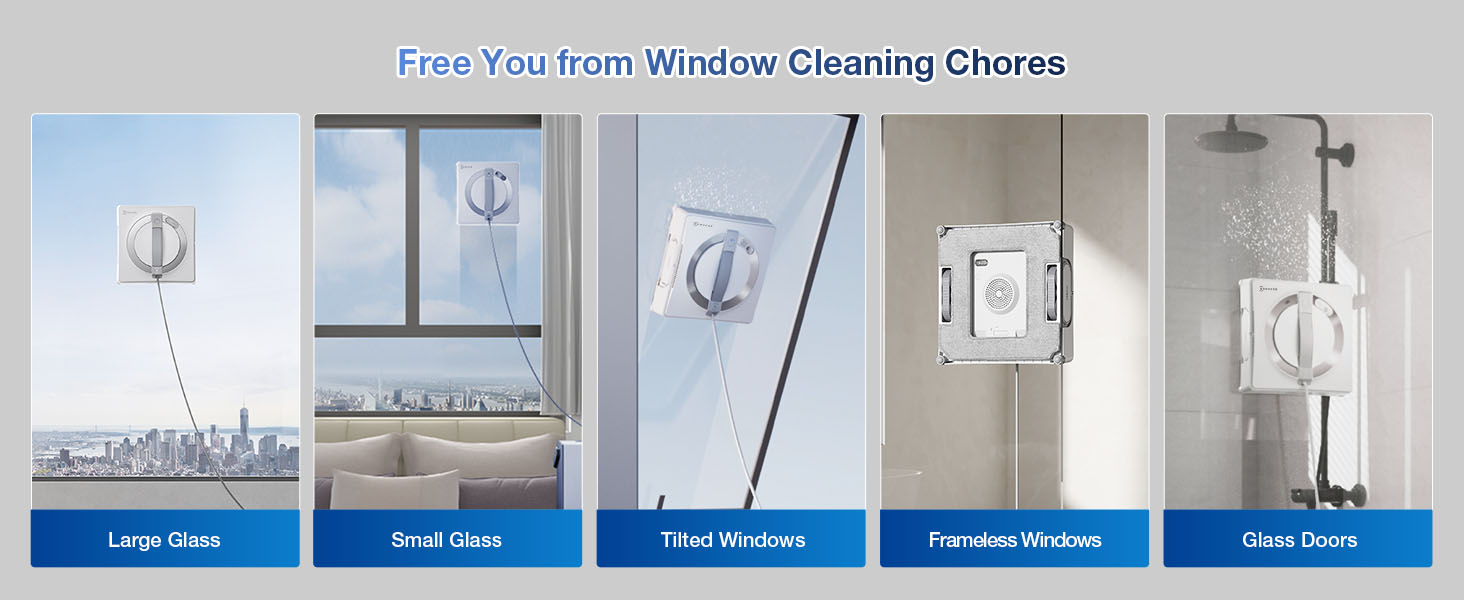
For windows with unusual exterior frame trim — wide, sloped bull-nose profiles rather than standard rounded trim — one buyer with a mountain home reported suction loss on windows with wide sloped exterior trim. Standard rounded trim presented no problems. If your windows have unusual exterior profiles, verify compatibility before using the robot at height.
HOBOT S7 Pro
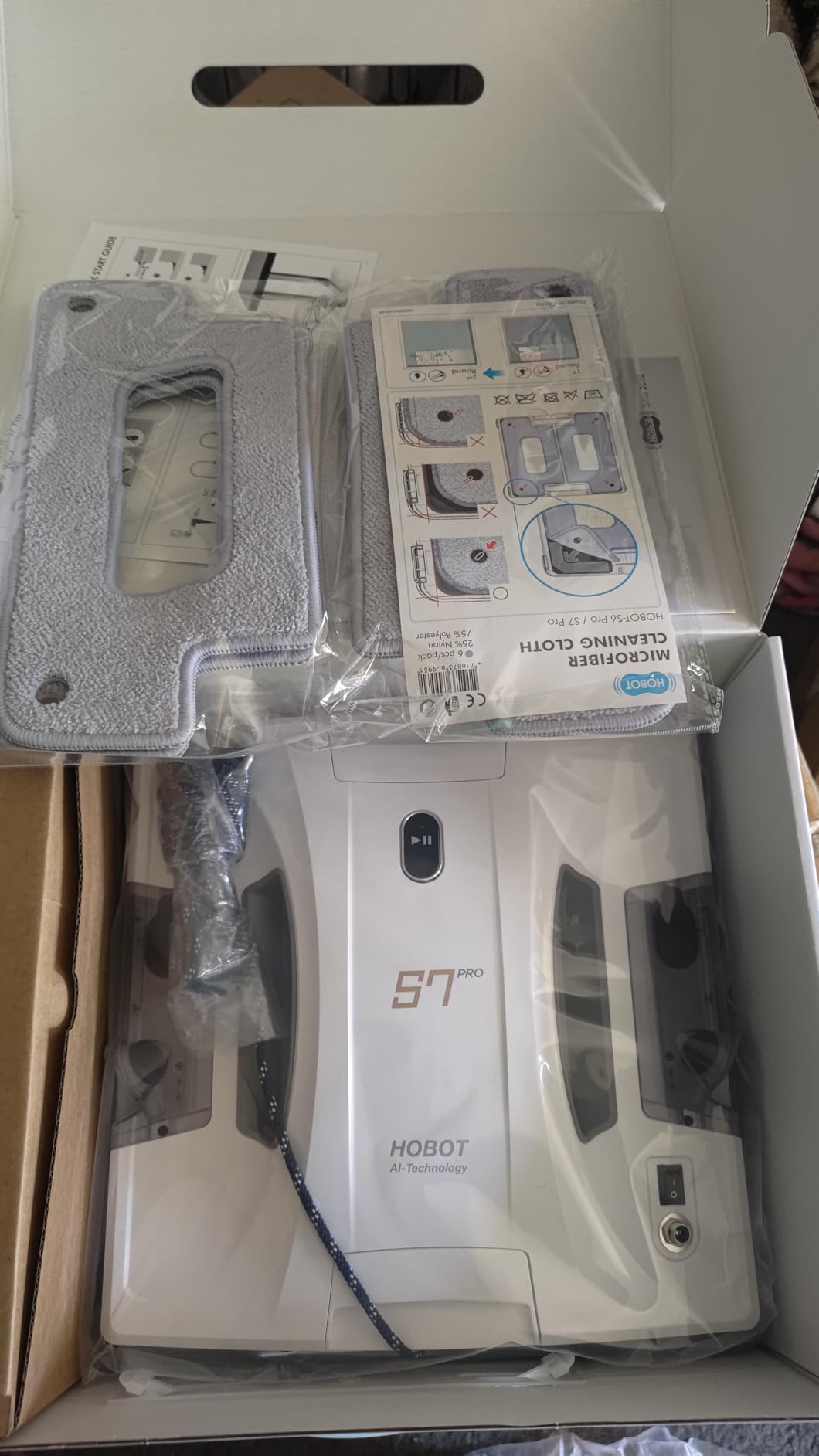
The dual mop system running at 600 strokes per minute is the S7 Pro’s defining technical feature. It doesn’t just drag across glass — it reciprocates, simulating hand-wiping motion and neutralizing static electricity that causes dust to re-settle after cleaning. A hotel owner who tested it on six second-story windows facing a busy road described the result as cleaning “much like a detailed hand-wipe, though it can occasionally miss very hardened dirt.”
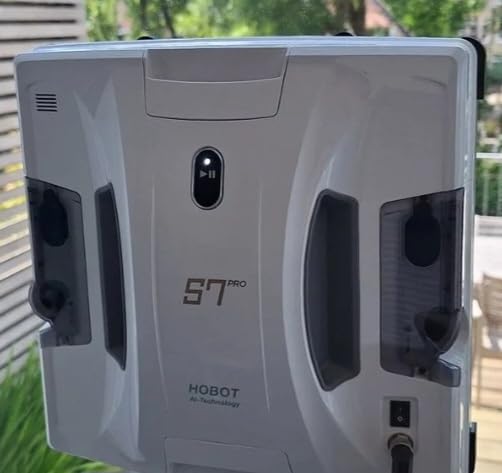
The 15μm ultrasonic mist particles from the dual spray system are finer than standard spray nozzles. Finer particles dissolve dirt on contact and evaporate cleanly, reducing the mineral deposit streaking that plagues robots with coarser spray. The cleaning cycle — mist, then scrub 600 times per minute, then wipe — is genuinely more thorough than the spray-and-drag approach of most competitors.
Coverage rate is 1 square meter per 2.6 minutes. A 6.5’ × 6.5’ window takes around 21 minutes on the double-wash setting. A 5.5’ × 3’ window takes about 9 minutes. These are timed numbers from an owner who measured. Slower than the Ecovacs models, but the cleaning quality on corners and edges is a different category entirely.
Winbot W2S
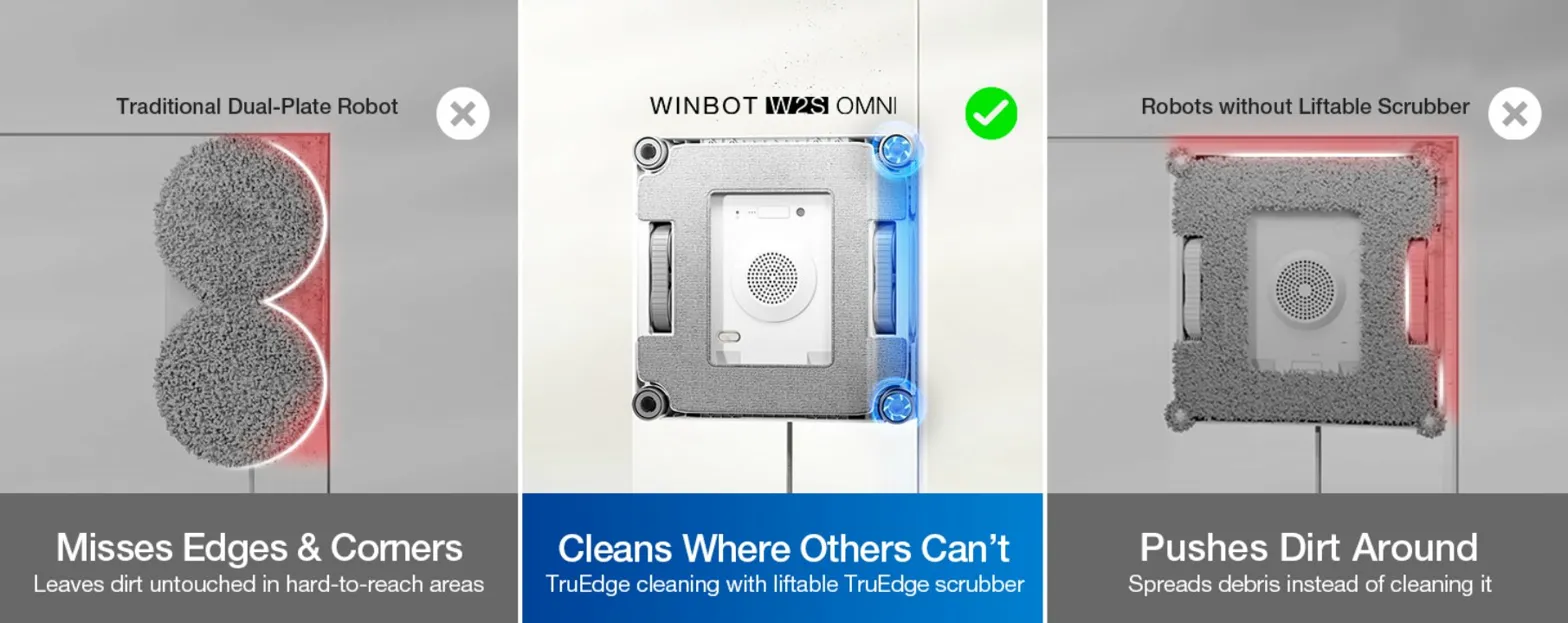
The TruEdge scrubber system is the W2S’s most important differentiator within the Ecovacs lineup. Traditional round pads physically cannot reach a 90-degree corner — the geometry doesn’t work. The TruEdge design gets within millimeters of the window frame, which is why the comparison diagram in the product listing shows so clearly what older robots miss.
For heavily neglected glass — windows untouched for years — expect multiple passes with pad rinsing between each cycle. One buyer ran nearly 40 cleaning cycles on glass deck railings in a single afternoon. That’s not the robot failing; that’s managing realistic expectations for deep restoration versus regular maintenance. The W2S is a maintenance tool, not a pressure washer.
The drive system uses a water-resistant synchronous belt and external drive wheel specifically to prevent slippage while moving upward on wet glass. The microfiber pad’s 400% water retention versus standard materials keeps it damp long enough to actually lift dirt rather than pushing it across the surface.
Navigation and Smart Features
All three robots handle navigation differently, and the differences are meaningful in daily use.
WIN-SLAM 4.0 (shared by the W2 Pro Omni and W2S) scans the glass surface, maps it, and calculates the most efficient route. At 14 cm/s for the W2 Pro Omni and up to 5.5 inches per second for the W2S, these are the fastest robots in this comparison. The systematic routing means coverage is predictable rather than random — you’re not watching a robot wander and hoping it hits everything.
The HOBOT S7 Pro uses its own path planning system. It covers 1 square meter in 2.6 minutes, which is slower than the Ecovacs models on a per-area basis. What it does that the Ecovacs robots cannot: the ELB (Edge-Leakage-Bumper) sensor system detects air leakage at frameless glass edges in real time, reversing before the robot loses suction and falls. On a fully frameless glass panel — no frame to bump into — this sensor system is the difference between safe operation and a dropped robot.

App control on the W2 Pro Omni and W2S includes a manual joystick mode that owners use more than you’d expect. When the robot navigates to a spot you can’t physically reach to remove it, the joystick brings it back. Multiple buyers described this as a real feature rather than a backup.
The W2 Pro Omni offers five cleaning modes accessible from either the app or the station panel directly — useful when you’re cleaning a window far from your phone charger.

Battery Life and Maintenance
W2 Pro Omni: The 110-minute battery covers roughly 55 square meters per charge. For a typical apartment with several large windows, that’s a complete session on one charge. The Omni Station recharges the robot while also storing the water tank and pads, which keeps everything organized between uses. Cleaning solution consumption is higher than most buyers expect — order extra before your first session.
HOBOT S7 Pro: No battery — cord only. The 4-meter cord is generous, and the 20-minute UPS backup means a power cut doesn’t mean a dropped robot. The UPS holds position and sounds an audio alert, giving you time to retrieve the unit safely. Safety rope maintenance matters here: the 4.5-meter, 230kgf-rated tether needs a solid anchor point above the window. Figure out your anchor point on each window before you start, not after the robot is already on the glass.
Winbot W2S: Cord only, 26-foot cable. Pad maintenance is the biggest ongoing cost and the most common source of user frustration. The two included microfiber pads are machine washable, which keeps costs low. Rinse after every cycle, wring out properly before reattaching, and use the official cleaning solution. Most streaking complaints in the reviews trace directly to dirty pads or soap residue from non-approved solutions.

What I Like
Winbot W2 Pro Omni:
- Portable station eliminates the outlet-proximity problem entirely
- Triple nozzle spray delivers consistent moisture coverage
- 12-level safety system with physical tether
- WIN-SLAM 4.0 reaches corners that manual cleaning skips
- Works on framed, frameless, tilted, and sliding door glass
HOBOT S7 Pro:
- Square pad design cleans 90-degree corners no round robot can reach
- 4800Pa suction — highest published figure in this category
- 600 strokes per minute reciprocating mop neutralizes static
- ELB sensors handle frameless glass edges safely
- 20-minute UPS backup and 230kgf tether for genuine high-rise safety
Winbot W2S:
- Amazon’s Choice with 600+ monthly sales and proven track record
- TruEdge scrubber gets closer to frame edges than standard round pads
- WIN-SLAM 4.0 navigation at a $180 lower price than the Pro Omni
- 26-foot cord covers most room configurations without extension
- Machine-washable pads keep ongoing maintenance costs low
What Could Be Better
Winbot W2 Pro Omni:
- Ships with only two cleaning pads — not enough for a full multi-window session
- Cleaning solution runs out faster than expected; not always in stock
- Auto-mode only works on rectangular windows; arched or triangular glass requires manual joystick control
- Physically large; narrow or segmented windows may be a problem
- Wide sloped exterior window trim can cause suction issues
HOBOT S7 Pro:
- Cord only — no battery mode
- Slower coverage rate than Ecovacs models (2.6 min/m²)
- Every window pane requires repositioning — high labor on small divided windows
- Fewer reviews than Ecovacs models; less accumulated real-world feedback
- Anchor point for safety rope requires planning on each window
Winbot W2S:
- Cord only — buyers expecting wireless operation sometimes purchase the wrong model
- Multiple passes needed for heavily neglected glass
- Occasional robot getting stuck in unreachable spots (joystick mode resolves this)
- Small segmented windows or hardware obstacles reduce effectiveness
Who Should Buy It
Buy the Winbot W2 Pro Omni if you live in a high-rise apartment, have windows on balconies or far from power outlets, or simply don’t want to manage extension cords. The portable station is a genuine quality-of-life upgrade over cord-dependent robots, and at $499 it’s the best cordless window robot currently available.
Buy the HOBOT S7 Pro if your windows have corners that matter to you, you’re dealing with frameless glass panels, or you’re running a commercial property with large fixed windows that get dirty regularly. The dual-mop system and ELB edge detection justify the price for these specific use cases. It’s not a casual-use robot — it rewards people who treat it as a proper tool.
Buy the Winbot W2S if your windows are near power outlets, you want the strongest combination of features per dollar, and you’re primarily doing regular maintenance rather than deep restoration. Six hundred units sold per month and Amazon’s Choice status reflect real buyer satisfaction, not marketing.
Who Should Skip It
Skip all three if you have windows with protruding hardware, Roman shade rails inside the glass area, or deep-set frame profiles that block the robot’s movement — no window robot handles these well. Skip the W2S and S7 Pro if you need cordless operation. Skip the S7 Pro if you have many small divided windows — the per-pane repositioning becomes genuinely tedious. Skip the W2 Pro Omni if your windows are mostly near outlets and $180 is a meaningful consideration for you.
Buying Advice
All three are available on Amazon. Pricing fluctuates, particularly the W2S which frequently sells below its $399.99 list price. At the time of writing, pricing may change — check the current price on Amazon before purchasing.
Check the Winbot W2 Pro Omni current price on Amazon
Check the HOBOT S7 Pro current price on Amazon
Check the Winbot W2S current price on Amazon
One practical note: whichever model you choose, order extra cleaning pads and an extra bottle of cleaning solution at the same time. Every model in this comparison suffers from the same owner complaint — running out of solution or clean pads mid-session. Buying extras upfront costs less than waiting for a restock.
Final Verdict
The W2 Pro Omni is the best all-around window cleaning robot for most people with high-rise or hard-to-reach windows. The portable station solves the single biggest practical problem with this category of product, and the 12-level safety system is the most comprehensive of the three.
The HOBOT S7 Pro is a specialist’s tool. If corner cleaning and frameless glass are your priorities, it does things the Ecovacs models physically cannot. Its lower review count reflects its newer market position, not a quality problem — the owners who’ve used it for real work are largely satisfied.
The W2S is the value choice that doesn’t feel like a compromise. Same navigation, TruEdge scrubbers, proven sales track record, and $180 cheaper than the Pro Omni. If the cord isn’t a problem for your window setup, this is likely the right choice.
All three require the same learning curve: understand pad maintenance, use the correct solution, set realistic expectations for heavily soiled glass. Do that and any of these robots will meaningfully improve your window cleaning routine.

FAQ
Which window cleaning robot is best for high-rise apartments?
The Winbot W2 Pro Omni is the most practical choice for high-rise use. Its portable battery station means you never need a power outlet near the window, which is the defining constraint in most high-rise apartments. The 12-level safety system and 110-minute battery make it the most capable cordless option in this category.
Can these robots clean frameless glass safely?
The HOBOT S7 Pro is the most capable of the three on frameless glass, thanks to its ELB edge sensors that detect air leakage before the robot reaches the edge. The Ecovacs models can handle frameless glass but rely on different edge-detection approaches. On any frameless glass above ground floor, always attach the safety tether to a solid anchor point.
Why is my window robot leaving streaks?
Almost always a pad maintenance issue. The cleaning pad needs to be changed after every single window pane — not every few windows, every one. A dirty pad stops cleaning and starts redistributing wet grime. Rinse and wring pads properly, use only the manufacturer’s recommended cleaning solution, and order extra pads before your first session.
Winbot W2 Pro Omni or Winbot W2S — which should I buy?
If your windows are near power outlets, the W2S at $319 offers essentially the same cleaning performance as the W2 Pro Omni for $180 less. The only real difference is the portable battery station. If your windows are on balconies, in rooms without nearby sockets, or you simply don’t want to manage cords, the W2 Pro Omni’s portability justifies the price gap.
How long does a window robot take per window?
The Winbot models at WIN-SLAM 4.0 speeds cover a standard 6×8 foot window in roughly 10 minutes on a thorough cycle. The HOBOT S7 Pro takes longer at 2.6 minutes per square meter — a 6.5’ × 6.5’ window runs about 21 minutes on the double-wash setting. Heavily soiled glass requires multiple passes regardless of model.
Are window cleaning robots worth the money?
For windows that are genuinely difficult or dangerous to clean manually — high floors, balconies, large floor-to-ceiling glass — yes. Professional window cleaning services charge per visit, and the W2S at $319 pays for itself quickly against that alternative. The non-financial benefit — not leaning out of a high window with a squeegee — is real and hard to put a price on.
What happens if the power cuts out mid-cycle?
The HOBOT S7 Pro has a 20-minute UPS backup that holds position and sounds an alert. The Winbot W2 Pro Omni runs on battery in cordless mode, so a wall power cut doesn’t affect it. The W2S has power-off protection as part of its 10-level safety system, and the physical safety tether provides backup on all three models if primary adhesion fails.
Do these robots work on shower glass?
Yes, all three work on vertical glass surfaces generally, not just windows. Multiple W2 Pro Omni owners specifically mention tall shower enclosures as a practical use case — place the robot on the glass while doing other things. The same pad maintenance rules apply.